Showing posts with label tate modern. Show all posts

Yayoi Kusama


Better late than never, some thoughts on the new Yayoi Kusama exhibition at Tate Modern...

I first encountered  Japanese artist Kusama’s gloriously wacky artwork in the Hayward’s group show Walking in My Mind back in 2009 and was instantly struck by its colourful eccentricity. But the Tate exhibition proves there’s much more to Kusama than the distinctive polka-dot installations for which she is best known.  Starting with her early works, the exhibition traces her artistic development chronologically through the 50s, 60s and 70s, following her from rural Japan to the heart of the New York art scene. The work here is incredibly varied, ranging from semi-abstract works on paper influenced by traditional Japanese artwork to trippy films of 1960s art ‘happenings’.  If one thing is clear from these early works, it’s how quick Kusama was to absorb contemporary influences, continually reinventing her work and finding new directions in response to other artists and their works.

Since 1977, Kusama has lived voluntarily in a psychiatric institution in Japan, marking something of a turning point. From here onwards, her practice seems more consistent, and we encounter works that might seem more familiar – from her soft, sculptural forms to the dizzying polka-dotted domestic space, I’m Here But Nothing. This is work that is vibrant, unexpected and often very enjoyable, yet the final installation Infinity Room – a disorientating, darkened, mirrored space which we must pass through before leaving the gallery – makes it quite clear that Kusama’s work is about more than entertaining eccentricity and jaunty coloured spots. Ultimately, this is work which challenges our perceptions of mental illness, exploring the ways that art can begin represent the disturbing experiences of psychological trauma, neurosis and obsession.

Yayoi Kusama is at Tate Modern until 5 June.

[Image: Yayoi Kusama Kusama posing in Aggregation: One Thousand Boats Show 1963 installation view, Gertrude Stein Gallery, New York 1963 © Yayoi Kusama and © Yayoi Kusama Studios Inc.]

Five More Things

Following on from my previous Five Things post, I thought I'd share another selection of things that have been pleasing me of late...


1.  I WANT MY HAT BACK - JON KLASSEN

Published by Walker Books, I Want My Hat Back is my new favourite picture book: a quirky and charming tale of a bear who has lost his hat. But whilst the story is sweet, it's the stylish, witty illustrations by Jon Klassen that really make this irresistible. The bear's face (above) makes me smile every single time I see it.


2. TACITA DEAN FOR THE TURBINE HALL AT TATE MODERN
 
The twelfth commission in Tate Modern's Turbine Hall as part of The Unilever Series comes from celebrated artist and filmmaker Tacita Dean  FILM is an 11-minute 35 mm film projection, standing 13 metres tall at one end of the darkened Turbine Hall. A montage of black and white, rainbow colours and hand-tinted film, this playful, intriguing and surreal installation is a thought-provoking tribute to the power of analogue in a digital age.


3. DARK NAILS

Maybe it's a hangover from Halloween, maybe it's because I've spent too much time browsing French fashion blog The Cherry Blossom Girl (pictured) but I am all about the dark nails at the moment. I had my nails painted black at the lovely vintage-style beauty salon Lost in Beauty in Primrose Hill a couple of weeks ago, and am completely converted.


 4. CHRIS HAUGHTON: DIGITAL HANDMADE

I went along to the private view of Booktrust Best New Illustrator 2011 Chris Haugton's exhibition at So far the future gallery earlier this week. As well as artwork from his picture books A Bit Lost and Oh No George the show includes all kinds of lovely objects designed by Chris and then handmade by traditional Fair Trade craft-makers in Nepal - beautiful bags, plush toys, lampshades and incredible rugs. The exhibition continues until 7 December: find out more about it here.


5. DIANA WYNNE JONES

I can't believe I managed to get through 28 years without discovering Diana Wynne Jones's brilliant books. I've been reading my way through her delightful Chrestomanci series, beginning with Charmed Life (pictured), as well as the wonderful Howl's Moving Castle and its sequels. Witch Week is my favourite so far but every one is fantastic.

So what's taken your fancy recently? Let me know in the comments if you've got favourite new finds to share...

And the winners are....


 Thanks to everyone who entered the Tate calendar giveaway!

I now know all about some of your cultural highlights for the summer, including the Royal Academy Summer Exhibition, the Magritte exhibition at Tate Liverpool, the Camberwell Arts Festival, and of course the mighty Manchester International Festival, which this time round features everything from an opera inspired by John Dee to The Day We Sang a 'love story with singing' created by Victoria Wood.

I've now randomly selected the two winners and they are:

Ben for the Miró calendar
Kate for the Watercolour calendar

I've emailed you both so get back to me as soon as you can to receive your calendars.

Miró at Tate Modern - and a giveaway!


I really enjoyed taking a slow wander around Tate Modern's Joan Miró exhibition this week. Galleries often describe their exhibitions as a 'must-see' but for me, this show really was. I've always loved the deep, powerful colours of Miró's paintings  and I'm endlessly intrigued by his spidery, fantastical shapes and symbols, so it's no wonder that this exhibition has been in my calendar for a while.

This is a very comprehensive retrospective, bringing together more than 150 paintings, drawings, sculptures and prints from moments across the six decades of Miró's career. Interestingly, it also traces the more politically engaged aspects of his work, tracing the development of his artistic practice in relation to political and social upheaval during the Spanish Civil War, the Second World War and in Franco's Spain.  In a more straightforward way, however, this work is also a great pleasure simply to explore and experience: for me, the especial highlights were the incredible black and white Barcelona Series, but also the meditative, colour-saturated Bleu triptych.

Miró is at Tate Modern until 11 September 2011.

Giveaway!

To celebrate this exhibition at Tate Modern, I'm excited to have a lovely Tate Miró calendar to give away courtesy of Flame Tree Publishing, as well as a beautiful calendar from Tate's Watercolour exhibition over at Tate Britain, which I blogged about back here.


If you'd like to enter the giveaway to win one of the calendars, simply leave me a comment at the end of this post to tell me what exhibition, event or other cultural happening coming up in the next few months you'll be putting in your calendar.

As well as telling me what cultural highlight is your 'must-see', don't forget to include whether you would prefer the Watercolour or the Miró calendar. From all the comments, two whinners will be selected at random - each will receive one of the two calendars.

The closing date for the giveaway is Friday 24 June. I'm looking forward to hearing your suggestions!

[Image: Joan Miró The Escape Ladder 1940. Museum of Modern Art, New York © Joan Miró and Fundació Joan Miró, Barcelona, via Tate]

Ai Weiwei at Tate Modern

Seeds

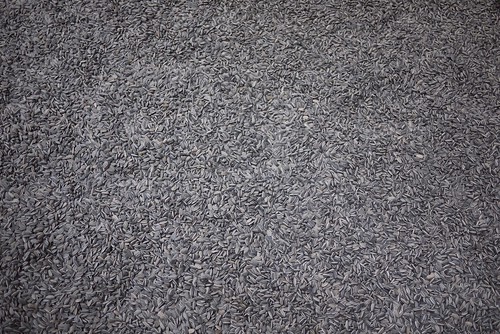
Ai Weiwei's new Tate Modern Turbine Hall installation, Sunflower Seeds, is made up of millions of what appear to be sunflower seed husks, but are in fact intricately hand-crafted porcelain imitations. Each seed has been painstakingly sculpted and painted by skilled craftspeople working in small-scale workshops in Jingdezhen, China, before being brought together in this work which explicitly invites us to think more deeply about what it means for something to be 'Made in China' and the related notions of import and export, and cultural or economic exchange.
The artist's original intention for the piece was that the audience would be able to walk across the expanse of seeds, to sit down amongst them, to pick them up and to look at them closely. However, Tate visitors have now been stopped from walking over the seeds because of health and safety concerns: the fear is that Tate staff might be at risk of respiratory problems from continued exposure to the dust created as people walked over them.
Visitors can still look at the seeds from a distance, but there's no doubt that this radically changes the artwork itself. The question is, is this even the same artwork if we can't interact with it in the way the artist intended?

Weiwei is said to be 'disappointed' by the decision, and when I visited, I felt disappointed too. The individual seeds are beautiful in their own right, and the overall vista is pleasingly minimal, but the installation as a whole now feels about as engaging as a large-scale gravel drive. For me, the best thing about the installation was the trail of ghostly footprints across the surface of the sunflower seeds, almost like tracks through snow. They acted as a little reminder that there is more to this artwork than we, for now at least, are able to experience.

[image by SimonDoggett used via Creative Commons]

No Soul for Sale: 10 Years of Tate Modern


From 14-16 May, Tate Modern celebrated its 10 year anniversary with a free arts festival for all. A highlight of the festival was No Soul for Sale - A Festival of Independents, which staged a takeover of the Turbine Hall for the entire weekend.

No Soul for Sale is the brainchild of artist Maurizio Cattelan and curators Cecilia Alem and Massimiliano Gioni. Described as "neither a fair nor an exhibition" but instead as "a convention of individuals and groups who have devoted their energies to keeping art alive... a spontaneous celebration of the independent forces that live outside the market and that animate contemporary art", No Soul for Sale brought together independent arts spaces, non-profit arts organisations and collectives from all over the world for an "exercise in coexistence". The floor was marked out in dotted red lines in a fashion reminiscent of the film Dogville, with the various organisations each taking their own section, resulting in what Tate curator Vincente Tolodi described as a "village of art". All this was accompanied by various events, performances and anarchic happenings of all kinds, with artists like Martin Creed and Cosey Fanni Tutti included in the line-up.

Of course, the extent to which any event can really be considered truly anarchic or indeed independent when it takes place at the Tate Modern, that bastion of the institution of art, is certainly up for debate. But whatever your views on this, it was impossible not to delight in the transformation of this vast temple to industrial minimalism into a riot of gleeful creative chaos, where coloured paper and smatterings of sequins were strewn recklessly across the floor, and children ran amok between haphazard ranks of tottering, lo-fi installations, whilst artists, curators, and visitors alike set up camp anywhere on the floor, equipped with sketchpads, laptops and coffee cups - the absolute antithesis of the untouchable, glossy 'white cube' spaces of the commercial arts market.

I was kicking myself for not having brought a camera, but I did snap a few pictures on my phone, including capturing my favourite amongst the No Soul for Sale installations - The Museum of Everything's pleasingly kooky Exhibition 2, displaying over 1000 works on paper and canvases by "unknown, untrained, unintentional and unexhibited" artists from across the British Isles. Works could even be submitted during the festival itself, resulting in a continually evolving exhibition presented in a characteristically exuberant style.