Showing posts with label london. Show all posts

Yayoi Kusama


Better late than never, some thoughts on the new Yayoi Kusama exhibition at Tate Modern...

I first encountered  Japanese artist Kusama’s gloriously wacky artwork in the Hayward’s group show Walking in My Mind back in 2009 and was instantly struck by its colourful eccentricity. But the Tate exhibition proves there’s much more to Kusama than the distinctive polka-dot installations for which she is best known.  Starting with her early works, the exhibition traces her artistic development chronologically through the 50s, 60s and 70s, following her from rural Japan to the heart of the New York art scene. The work here is incredibly varied, ranging from semi-abstract works on paper influenced by traditional Japanese artwork to trippy films of 1960s art ‘happenings’.  If one thing is clear from these early works, it’s how quick Kusama was to absorb contemporary influences, continually reinventing her work and finding new directions in response to other artists and their works.

Since 1977, Kusama has lived voluntarily in a psychiatric institution in Japan, marking something of a turning point. From here onwards, her practice seems more consistent, and we encounter works that might seem more familiar – from her soft, sculptural forms to the dizzying polka-dotted domestic space, I’m Here But Nothing. This is work that is vibrant, unexpected and often very enjoyable, yet the final installation Infinity Room – a disorientating, darkened, mirrored space which we must pass through before leaving the gallery – makes it quite clear that Kusama’s work is about more than entertaining eccentricity and jaunty coloured spots. Ultimately, this is work which challenges our perceptions of mental illness, exploring the ways that art can begin represent the disturbing experiences of psychological trauma, neurosis and obsession.

Yayoi Kusama is at Tate Modern until 5 June.

[Image: Yayoi Kusama Kusama posing in Aggregation: One Thousand Boats Show 1963 installation view, Gertrude Stein Gallery, New York 1963 © Yayoi Kusama and © Yayoi Kusama Studios Inc.]

Laura Oldfield Ford: Transmissions from a Discarded Future


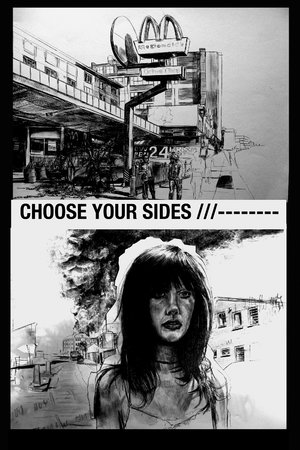
Managed to pop into Hales Gallery today to catch the final day of Laura Oldfield Ford's show, 'Transmissions from a Discarded Future'. Oldfield Ford's delicate, yet bitingly political ballpoint drawings of mundane scenes of abandoned housing estates, deserted tower blocks, derelict shopping arcades, advertisements and tall billboard posters are hugely powerful and distinctive. Taking their cue from the August riots, they fizzle with anger, casting a new light on the forgotten corners of the urban landscape.


[Images: Transmissions from a Discarded Future #1, 2011, Ink on Tyvek, 239.5x169cm and Transmissions from a Discarded Future #1, 2011, Ink on Tyvek, 239.5x169cm by Laura Oldfield Ford, via Hales Gallery]

Crazy for You


I do love a good musical, and so I was delighted to be invited to go along and see a performance of  Crazy for You, a new hit West End show inspired by the classic songs of George and Ira Gershwin, at the Novello Theatre earlier this week.

Crazy for You is the story of stagestruck banker Bobby who longs to dance on the Broadway stage, but instead his stern mother despatches him to a sleepy Western town in the Nevada desert to foreclose on a derelict theatre. On arrival he immediately falls for the owner’s daughter, the feisty Polly, and hatches a harebrained scheme to save the theatre and win Polly’s heart by impersonating famous impresario Zangler, and bringing the Zangler’s Follies chorus girls out West to put on a show.

All kinds of silly shenanigans ensure, especially when the real Zangler turns up with Bobby’s mother and overbearing fiancĂ© in tow. But let’s be honest, it’s not really the story that matters here, but the fantastic, feel-good song and dance routines. Toe-tapping Gershwin favourites like I Got Rhythm, Someone to Watch Over Me and Nice Work if You Can Get It are used to excellent effect with delightful choreography from Stephen Mear. This is a true old-fashioned musical in glittering 1930s style, complete with high-kicking showgirls in glamorous outfits, vaudeville-style comedy routines, a tap-dancing hero and a romantic finish. The gilt interior of the Novello theatre makes an ideal setting for this gleefully escapist and nostalgic production.

Joyous and relentlessly upbeat, Crazy for You seems like the perfect antidote to ‘politics and axes taxes and people grinding axes’ of recent weeks - as the Gershwin number goes. If silly jokes and sparkles are your thing, then I can heartily recommend this as the perfect festive treat… and I know that I for one will be singing I Got Rhythm (and tapping the odd toe) for the rest of the week.


Pipilotti Rist: Eyeball Massage


Pipilotti Rist: Eyeball Massage. Installation view at the Hayward Gallery. Administrating Eternity (2011) Photo Linda Nylind

I’ve been a fan of Pipilotti Rist’s exuberant artwork since I first saw an exhibition of her work at FACT in Liverpool back in 2008. I think I would find it difficult not to be drawn to any artist who, as a teenager, renamed herself Pipilotti in honour of Astrid Lindgren’s Pippi Longstocking; but more than that, there’s something distinctive and very charming about the dizzy, colourful, visceral and provocative world that Rist’s artwork brings to life.

Given this, I was excited to see Rist’s new solo exhibition at the Hayward Gallery – the playfully-named Eyeball Massage – on Friday night, a treat at the end of a long and stressful week. This show brings together over 30 works from the mid-1980s to the present day, including some which have been created specially for the Hayward.

This is an exhibition which is always unexpected. Before we even enter the gallery, we are greeted outside by drifts of smoky bubbles and strings of illuminated underpants, like unlikely bunting crossed with a washing line; inside, a video installation is secreted in a cubicle in the ladies’ toilets. Meanwhile, in the galleries themselves we are invited to lounge on semi-sinister cushions in the shape of headless bodies, and watch sensuous, dreamy projected images rippling over a labyrinth of gauzy curtains. Like Alice in Wonderland, we are repatedly confused by shifting perspectives: in Mutaflor the artist's immense mouth seems to swallow the viewer whole; but a moment later in Selfless in a Bath of Lava we peer through a tiny hole in the floor to glimpse her in miniature, naked and surrounded by molten lava, shouting messages to us.


Pipilotti Rist: Eyeball Massage. Installation view at the Hayward Gallery. Photo Linda Nylind. Selfless In The Bath of Lava (1994)

Physicality is hugely important throughout this exhibition: the human body is celebrated everywhere, from Blood Room, a ‘visual poem’ in praise of menstruation to Digesting Impressions which takes us on an endoscopic journey through the oesopaghus, stomach and intestines. We as viewers have to engage physically with the works on display, from poking our heads through the viewing holes of A Peek into the West – A Look into the East (or E-W) to allowing our own lap to become the screen for a video projection in Lap Lamp.

Perhaps because my expectations were so high, Eyeball Massage didn’t quite deliver everything I wanted it to. Some of the works in the show, like Your-Space-Capsule and Ever Is Over All I had seen before, and others, like Yoghurt on Skin – Velvet on TV in which tiny LCD screens are hidden inside handbags and seashells, didn’t grab me as much as I might have expected. However, much of this show was all that I have come to expect from Rist’s work – a fizzy blend of hypnotic, uplifting, unsettling and invigorating.


Pipilotti Rist: Eyeball Massage. Installation view at the Hayward Gallery. Administrating Eternity (2011) Photo Linda Nylind

The New Yorker critic Peter Schjeldahl has described Rist as an ‘evangelist of happiness’ and interestingly, Adrian Searle (who in my review of the FACT show I cite as criticising Rist’s work as ‘mak[ing] me feel as if I'm stuck inside a vegan, possibly even fructarian, new-age indoctrination video’) has apparently been converted too, stating in his review of Eyeball Massage: ‘You have to be a miserabalist… not to take pleasure in Rist's warm baths of light and nature, her sunny fertile fields and underwater rebirthings, her gleeful swooning mischievousness.’ It’s this, ultimately, that makes this exhibition a delight – the sheer joyfulness of Rist's work.

Eyeball Massage is at the Hayward Gallery until 8 January. Take a look at an interview with Rist about the show, below:


Museum of Everything Exhibition #4 at Selfridges


If you've been following this blog for a while, you'll know that I'm a big fan of the Museum of Everything, which describes itself as Britain's only museum dedicated to outsider art. Two of their past exhibitions have been presented in a ramshackle building in Primrose Hill, and the unapologetically handmade aesthetic, combined with an exuberantly chaotic presentation of work have combined to create a pleasingly off-the-wall atmosphere. 

The latest offering from the Museum of Everything, Exhibition #4 is somewhat different. This time the museum has popped up in Selfridge's, one of London's largest and most famous department stores, where it has transformed the Ultralounge area into an exhibition space filled with over 400 drawings, paintings and sculptures from international studios for contemporary self-taught artists with learning and other disabilities. The Oxford Street windows of the store have also been transformed into a series of installations, showcasing the work of some of the artists in the exhibition.

I was looking forward to seeing this latest show when I went along last Sunday, but all the same I wasn't quite sure what to expect from an exhibition of marginalised artists in such an overtly commercial setting.  Arriving a little early, I found myself waiting outside the doors on bustling Oxford Street along with hordes of eager shoppers, many of whom were obviously intrigued by the eye-catching window installations. At last the doors opened, and I went down to the basement, passing on my way a whole area dedicated to Christmas decorations, shimmering with tinsel and tree decorations, and already blasting out 'All I Want for Christmas is You', which set the stage for a slightly surreal experience.

In many ways, the exhibition proved to be much of what I've come to expect from the Museum of Everything. The show is well thought through, with some challenging and intriguing work, and maintains its usual quirky homespun charm, although perhaps it loses a little something away from the kooky atmosphere of its Primrose Hill home. I especially enjoyed Erica Punzel's multicoloured abstract images, Leonard Fink's dense monochrone maps, Mary Ogunleye's garlands of rainbow-coloured particles and Kenya Haley's drawings of cupcakes and ice-creams. I was also interested to see a whole host of works exploring text in various ways, from Nicroe Kittaka's images made up of signs, letters and ideograms, to Kunzo Matsumo's lists, letters and diaries, and Harald Stoffer's amazing letter-based drawings, raising some interesting questions about the relationship between creative writing and visual art. So far, so good.

After a good rummage around the exhibition, I headed up to the Shop of Everything on the ground floor (delayed en route by an optimistic salesman intent on demonstrating handwarmers, in spite of the fact that it was probably one of the hottest days of the year), which is another new development for this show. Although there have been bags, badges and a few other  items of branded merchandise for sale at their shows in the past, this is a much more wholesale affair, packed with everything from postcards to prints to Oyster card holders to crayons to designer t-shirts and other clothing produced in collaboration with the likes of Clements Ribero. The items themselves are lovely, and I'm the first to recognise that arts organisations need to find practical ways to generate income to support what they do, yet I have to admit that this proliferation of branded goods left me feeling slightly uneasy.

I don't think there's any good reason why art shouldn't be exhibited in a shop, and I can't help admiring the sheer panache and ambition of the Museum of Everything in brokering a collaboration on this scale with Selfridges, probably the most prestigious name in retail in the UK. Yet somehow all this seems to change the Museum from something distinctive and idiosyncratic to another slick, clever branding exercise, which makes it feel suddenly much more like the other big name galleries we encounter in the art world. What made the original Museum of Everything exhibition so special was how out of the ordinary it felt: remote, secret, magical, like stepping into a colourful, uncomfortable otherworld. Encountering it on Oxford Street somehow just isn't the same.

Yet somehow I still can't quite make up my mind about Exhibition #4. In some ways, I admire how the Museum of Everything is apparently breaking all its own rules to reach new audiences and to grab the attention of all kinds of people who might never usually think about visiting an exhibition like this. But in part I also have a certain sympathy with Adrian Searle, who writing in the Guardian, suggests that the setting is 'inappropriate' and that such challenging artworks might require more than an idle visit in between trips to the Clinique counter. But on the other hand, is chaotic Oxford Street absolutely the appropriate place - in some ways the perfect setting for these bold, spiky, attention-grabbing artworks? It certainly offers a fantastic opportunity to get the voices of these often unheard artists out there into the city's public spaces. Or has the Museum of Everything simply sold out?

I don't have any answers to any of these questions, but however you choose to look at it, Exhibition #4 certainly offers its visitors plenty to think about.

Exhibition #4 is at Selfridge's until 25 October 2011. Find out more about the Museum of Everything, visit the online shop, or see their digital exhibition.

Fabulous Fifties at the Museum of London


I’ve long been a fan of all things 1950s from rock and roll music to swingy skirts to drinks with cocktail cherries, and I’m currently glued to BBC 2’s The Hour, so naturally I was delighted to be given a couple of tickets to a late event at the Museum of London paying tribute to the 'fabulous fifties' last week.

The Museum of London is one of my favourite London museums and not only because it’s literally a stone’s throw from where I currently live. The permanent galleries tell a fascinating story of London’s history from the first people to dwell in settlements along the Thames up until the present day, and there are some great temporary exhibitions too: currently there’s an engrossing exhibition of London Street Photography from 1860 to the present day as well as a fun display of hand-drawn maps of the city in the foyer. Downstairs in the cafe, you'll also find an installation by the Light Surgeons, which is to be the first in a series of media art commissions at the museum.

I’ve been to plenty events at the museum before but this was the first event in their Late series that I’d seen, transforming the entire museum for the evening after the usual closing time. On offer was music from Laura B and the Moonlighters and The Broken Hearts DJs, vintage pin-up makeovers, talks on fifties fashion and popular culture from the museum's curators, dance classes with The London Swing Dance Society, craft workshops from  Tatty Devine, and of course, fifties-style food and drink.

Perhaps unsurprisingly given the current fashion for all things vintage and nostalgic, this was a hugely popular event: the Tatty Devine workshop was so busy that sadly I didn't get chance to join in, but I was lucky enough to get my hair styled by one of the stylists from the Vanity Box, who provided a pop-up vintage salon creating 1950s hair and make-up looks. And as well as tapping my toe to a few fifties tunes, and sampling some chips in a cone, I also snapped a few shots of some of the amazing dancers twisting, strolling and hand-jiving the evening away - for once I managed to remember a camera! It was a great evening for people watching, with some amazing outfits and retro frocks on display, but what's more, it was interesting to see the museum transformed into such a buzzing and lively space for a fun evening event - this was certainly a clever strategy for drawing in new audiences, as well as to approach learning about the history of the 20th century in a different way.


This event was part of a month-long programme across the city to celebrate the 60th anniversary of the Festival of Britain: find out about more events at Story of London.  For anyone who like me, enjoys 1950s music, you might also be interested in this fifties inspired blog written for the event by The Broken Hearts DJs featuring some of their favourite tunes from the decade.

Save our Placards!


 Back in March this year, I took part in the March for the Alternative along with about 500,000 other people. The march was a protest against the government’s spending cuts, and one of the largest demonstrations ever seen in the UK.

Being on the march was a fascinating experience: it was great to be part of such a friendly and positive crowd, meeting and talking to people about why they were there, and admiring the wealth of amazing banners and placards that people had made for the event. Never ones to resist the opportunity for a bit of drawing, cutting out and sticking, we of course made our own placards for the march too, and afterwards donated them to the Museum of London, who together with the Save our Placards team from Goldsmith’s were helping to document the occasion.
We were very excited to find out recently that one of our placards (the snappily titled March for the Squeezed Bottom, above) had been selected to take part in an exhibition, Nothing in the World But Youth, opening at the Turner Contemporary in Margate in September.You can read about the story behind our placard (and see some photos of me drawing the lettering) over at the Save our Placards blog; but more importantly, the team are still trying to trace the creators of 8 of the 12 placards selected for the exhibition. If you were on the march in March, then do take a look at the slideshow of placards, and get in touch with them if you know who made any of these beauties.

(It goes without saying that I'll of course be going to Margate to see our placard sharing exhibition space with work by Peter Blake, Sarah Lucas, Andy Warhol and many others, so watch this space come September for more...)

Royal Academy of Arts Summer Exhibition 2011


The Royal Academy Summer Exhibition is undoubtedly one of the most important arts events of the year, and after several of those who entered the calendar competition told me it was also their cultural highlight of the summer, I knew I should go along and take a look!

I have to admit (shamefaced) to never having been to the Summer Exhibition before, and as such I was curious to see it. The show has often been characterised as occupying the traditional and 'safe' end of the contemporary visual arts spectrum, yet it is also something of a phenomenon: the largest open-submission contemporary art exhibition in the world, it has been running since 1768, and this year attracted over 12,000 entries from 27 countries.

Far from being dry or dusty, I found the exhibition to be a hugely inspiring experience. Wandering through the interlinked galleries is like feasting on a delightful smorgasboard of different work, encompassing a huge range of styles and approaches. I loved the presentation style, with works often grouped close together - perhaps most obviously in Gallery III (pictured above) which this year was hung by Christopher Le Brun and Tony Bevan, and which Le Brun describes as 'a battle of the paintings'. Rather than seeming cluttered or chaotic, the result is a pleasingly exuberant patchwork of art.

For me, the prints and the paintings were the undoubted highlight of this exhibition: I was much less taken with the photography, architecture and sculpture, although I did enjoy the scribbly geometric forms of Anthony Gormley's Drift, and Jeff Koons' exuberant Colouring Book.  Amongst my favourite spaces were the Small Weston Room, arranged by Olwyn Bowey - a treasure trove of miniature and small scale works - and Room I, hung by Chris Orr, filled with an intriguing range of prints by everyone from Gillian Ayres to Tracy Emin; Keith Coventry to Elizabeth Blackadder, plus vitrines containing artist's books.

Half the fun of the Summer Exhibition is stumbling upon new talent jostling alongside works by well-known or favourite artists whose style is instantly identifiable, be it Rob Ryan's magical images or Barbara Rae's jewel-coloured screen prints. There's more fun to be had poring over the list of works in the exhibition, which includes prices for the majority of the works, and choosing which ones you might buy for yourself, just supposing you happened to have a small fortune to hand. Altogether, the Royal Academy Summer Exhibition is a most enjoyable experience - certainly this year one of my cultural highlights of the summer too!

Many thanks Sam and Kate for the recommendation.

[Image: Installation view of Gallery III. Photo: John Bodkin. Via Royal Academy of Arts]

Yohji Making Waves

Yohji - Making Waves

Last weekend I visited The Wapping Project for the first time. Built in 1890, this extraordinary and beautiful building was originally the Wapping Hydraulic Power Station, but is now a restaurant and contemporary art space. Some of the machinery from the original power station is still in situ in the very tempting-looking restaurant, which unfortunately I didn't get chance to sample on this occasion, though I'm looking forward to going back to try it another time. As well as the restaurant, the venue houses the Boiler House - an exhibition/installation space - and an art bookshop housed in a greenhouse,as well as outdoor artworks.

The installation currently in the Boiler House is no less extraordinary than the building itself. Yohji Making Waves is a single-piece, site-specific installation created by fashion designer and artist Yohji Yamamoto, in collaboration with scenographer Masao Nihei. In this work, the cavernous, darkened Boiler House space is flooded with water, and a beautiful, oversized silk wedding dress (an iconic piece taken from the designer's autumn/winter 1998 collection) is suspended above it, reappearing as a ghostly reflection in the dark, rippling waters. The space is lit by a string of bulbs sending glimmering light out across the water, a haunting soundtrack plays, and visitors can take a closer look at the dress by clambering aboard a small boat, which a boatman rows around the flooded gallery at regular intervals.

There's something both mesmeric and meditative about this atmospheric installation. But although there's an eerily beautiful quality to the black depths of the water, and spectral floating dress, there's also something hugely fun and anarchic about the very idea of flooding a gallery and rowing around it in a boat. In this way, as well as being contemplative, this is an enchantingly playful installation: it's little wonder that our fellow gallery visitors were beaming with delight as they hopped aboard the little boat and set off across the water.


The installation is the third element of a series of exhibitions devoted to Yamamoto's work in London this summer: the others, which I haven't had chance to visit as yet, are Yohji's Women, an exhibition of photographs at The Wapping Project Bankside, and of course Yohji Yamamoto, a major solo exhibition at the V&A. However, whether or not you're a fan of Yamamoto, I'd highly recommend visiting this installation: one of the most imaginative and appealing pieces of contemporary art I've seen for some time.

It's surprisingly difficult to find details of the installation online, but it is open daily -  Monday - Friday from 12 noon - 10pm and Saturday-Sunday from 10am. Boat rides take place every 15 minutes. The installation is free to enter but a ticket is required for the boat.

Yohji Making Waves is at the Wapping Project until 10 July 2011.

[Image by Madeline Graham via Flickr used under Creative Commons]

MirĂł at Tate Modern - and a giveaway!


I really enjoyed taking a slow wander around Tate Modern's Joan MirĂł exhibition this week. Galleries often describe their exhibitions as a 'must-see' but for me, this show really was. I've always loved the deep, powerful colours of MirĂł's paintings  and I'm endlessly intrigued by his spidery, fantastical shapes and symbols, so it's no wonder that this exhibition has been in my calendar for a while.

This is a very comprehensive retrospective, bringing together more than 150 paintings, drawings, sculptures and prints from moments across the six decades of MirĂł's career. Interestingly, it also traces the more politically engaged aspects of his work, tracing the development of his artistic practice in relation to political and social upheaval during the Spanish Civil War, the Second World War and in Franco's Spain.  In a more straightforward way, however, this work is also a great pleasure simply to explore and experience: for me, the especial highlights were the incredible black and white Barcelona Series, but also the meditative, colour-saturated Bleu triptych.

MirĂł is at Tate Modern until 11 September 2011.

Giveaway!

To celebrate this exhibition at Tate Modern, I'm excited to have a lovely Tate MirĂł calendar to give away courtesy of Flame Tree Publishing, as well as a beautiful calendar from Tate's Watercolour exhibition over at Tate Britain, which I blogged about back here.


If you'd like to enter the giveaway to win one of the calendars, simply leave me a comment at the end of this post to tell me what exhibition, event or other cultural happening coming up in the next few months you'll be putting in your calendar.

As well as telling me what cultural highlight is your 'must-see', don't forget to include whether you would prefer the Watercolour or the MirĂł calendar. From all the comments, two whinners will be selected at random - each will receive one of the two calendars.

The closing date for the giveaway is Friday 24 June. I'm looking forward to hearing your suggestions!

[Image: Joan MirĂł The Escape Ladder 1940. Museum of Modern Art, New York © Joan MirĂł and FundaciĂł Joan MirĂł, Barcelona, via Tate]

Tracey Emin: Love is What You Want


I had mixed feelings about going to see Tracey Emin’s new solo show, Love is What You Want, at the Hayward Gallery last week. It’s difficult not to feel slightly bored by Emin, who along with her fellow YBAs, often just seems overexposed. Endlessly characterised as making work that is cynical and crass, more concerned with the pursuit of notoriety than artistic integrity, Emin is overdone. Every detail of her life – from the traumatic events of her childhood to her political views – is well-known and well-documented. What is there left to discover about Tracey Emin?

Yet in spite of these misgivings, I also found myself unexpectedly interested in this new opportunity to engage with Emin's work, as opposed to her media persona - especially given that I hadn't previously seen much of her work in a gallery setting. Love is What You Want provides the ideal opportunity for a re-appraisal, being a comprehensive and beautifully-curated survey of Emin’s entire career to date, bringing together work in a wide range of different media.

It was this incredible variety of work that initially struck me about this exhibition. Emin is well-known for making certain kinds of work, perhaps most famously her distinctive quilts and other embroidered pieces such as the 'tent' Everyone I Have Ever Slept With 1963-1995. However, there’s a much broader range of work to explore here, from film and video pieces to sculpture to photography to painting to printmaking.

I was also struck by the recurring use of text throughout so many of Emin’s work: this is an exhibition rife with language and storytelling, from the bold, mis-spelled appliquĂ©d slogans of her blankets, to her glitzy neon lettering, to her handwritten texts. It’s interesting that Emin isn’t often thought of as an artist who works with language, given that this exhibition proves her to be a powerful storyteller: as she herself points out ‘it’s my words that actually make my art quite unique’.

Throughout the exhibition, it is clear that Emin’s own life is always the starting point for her art, which is confessional as often as it is confrontational. Although some of the subject matter of these highly personal, hard-hitting works remains for me difficult – pouring over ephemera related to traumatic events such as her botched abortion can’t help but leave the viewer with an uncomfortable (and no doubt, deliberately so) sense of grubby voyeurism – there’s no doubt that these are thought-provoking pieces. However solipsistic and manipulative her work sometimes seems, there is a playful sense of humour at work here too. It’s difficult not to admire Emin’s strikingly irreverent and often self-parodic approach to making art, which certainly sets little store by the conventions of the fine art world.


Ultimately though, it was the jaunty, hand-crafted, down-at-heel yet exuberantly girly aesthetic of Emin’s work which engaged me above and beyond its subject matter. There’s something particularly appealing about the rainbow colours of her blankets and upholstered chairs, the delicate embroidery, the fuzzy quality of the films, the scribbly but elegant handwriting, the cluttered ephemera, and the graceful line drawings.  From the ramshackle wooden structures of Knowing My Enemy to her spangly neon lights, the influence of Emin’s upbringing in Margate is clear – this whole show has something of the sleazy faded theatrical glamour of a seaside town.

Although I left this exhibition still with mixed feelings, I also found myself engaged, surprised and unexpectedly intrigued: for me at least, it seems that there is something new to discover in Tracey Emin's work after all.

Love is What You Want is at the Hayward Gallery until 29 August 2011. For more information visit: www.southbankcentre.co.uk/tracey

Two Years On: Favourite London Places

View London in a larger map

To celebrate a second year of living in London, I thought I'd revisit the map of favourite London places that I created this time last year, and add a selection of new favourite spots. The map includes everything from places to eat and drink, to art galleries, to bookshops, to the best spots for simply wandering and people-watching. 

Click one of the coloured pins for more information, or click here to see the full map with all the locations and notes.

So, where have I missed? What are your favourite London places?

Susan Hiller: Tate Britain


 [Susan Hiller, Witness 2000. Tate Britain Installation shot
Original commission Artangel © Susan Hiller. Photo: Tate Photography/Sam Drake]

I finally managed to get down to Tate Britain to see Susan Hiller’s exhibition last weekend, on the final day of the exhibition, and I'm so glad I did. I was intrigued by the sheer variety of work on display, spanning four decades of Hiller's career, but also amongst this selection were some incredible stand-out pieces that I found especially captivating.

Many of the works in this show engage with notions of meaning and memory, including what is lost and forgotten. I found myself especially drawn to those that had an anthropological quality, collecting materials often seen as disposable or ephemeral - from seaside postcards or clips from popular films - and carefully assembling and cataloguing them to give them new status. Dedicated to the Unknown Artists, for example, is a collection of postcards from British seaside towns, all of which share the same caption: ‘Rough Sea’. Accompanied by meticulous charts and documents mapping their location and information about their finding, they are both beautiful in their own right, immediately evoking windswept, faded seaside towns, and intriguing as a kind of museum collection. The title makes it clear that the work is in part intended as a tribute to the forgotten artists who painted, photographed and hand-tinted these scenes.

Monument is a tribute of a different kind, but once again exploring the idea of lost or forgotten identities. There’s a strangely uncanny feel to this series of photographs of memorial plaques from a neglected Victorian monument to civilian heroes from a London park. From the Freud Museum, on the other hand, takes this notion of re-investing meaning in a different direction, bringing together a range of apparently unrelated ‘found’ objects in a very personal take on the museum collection. Presented in identical brown cardboard boxes, the ephemera collected takes on a potent quality, becoming a series of mysterious personal mementos, relics and talismans - a system of fragments that point towards an ultimately inaccessible narrative.

There’s a similarly mysterious quality to The Tao of Water: Homage to Joseph Beuys – a cabinet containing bottles filled with water collected from holy wells and streams around the world. Regardless of the nod to Beuys, there’s something intriguing, beautiful and rather magical about this array of tiny, delicate antique bottles and test tubes, each carefully labelled with the location it was collected, and pointing to a multitude of different sacred sites.

There are a number of film and video works in the exhibition, which exhibit a similar quality of compelling strangeness, such as  Psi Girls (1999), which assembles a series of images taken from films of girls with telekinetic powers in a weirdly mesmeric installation. However, for me it was the final work that had the most overwhelmingly powerful impact. Witness is an extraordinary installation: a hanging garden of what initially appear to be ethereal silvery tendrils, dangling from the ceiling of a darkened room. On stepping inside this softly glowing space, it becomes clear that these are in fact a host of tiny circular microphones, hanging from silver wires attached to the ceiling. Listening to each microphone reveals a quiet yet matter-of-fact voice, which could be speaking any one of a number of different languages, telling his or her story of an encounter with UFOs or creatures from other spheres. Whether these stories are real or imagined is hardly the point: it’s the experience of listening to these hushed voices in this breathtakingly beautiful science-fiction style space that makes the work powerful.

Full of wonder, strangeness and ultimately, pathos, Witness was for me the undoubted highlight of an intriguing body of work, which always comes back to the idea of the unknown and inaccessible. Echoing with haunting lost voices and layered with fragments of forgotten things, this exhibition was a poweful experience and one I'm glad not to have missed out on:  a thought-provoking and inspiring retrospective.


[Susan Hiller Monument, 1980-1 Image:Tate Britain installation shot 
© Susan Hiller. Photo:Tate Photography/Sam Drake]

Creekside Open 2011: A.P.T. Gallery


'Why didn't I take any photographs?' is a question I once more find myself asking after yesterday's visit to A.P.T.  Gallery in Deptford for the 2011 Creekside Open. As usual I was too busy chatting, looking at art and people-watching to remember to take any pictures. I am going to make a determined resolution to take more photographs at events I go to in the future: in the meantime, you'll have to make do with this invitation (above) and a few words on the show, since I don't have any photographs to share.

The Creekside Open is an annual open competition for visual artists: what sets it apart from other, similar initiatives is that each year, two separate exhibitions are selected by two different selectors from the same pool of submissions. This year's selectors are Dexter Dalwood and Phylida Barlow: Dalwood's selection opened at A.P.T. Gallery yesterday, and the second exhibition, selected by Barlow, will open in June. 

From some 2,700 works submitted, Dalwood has chosen an interesting range of work for his show, including paintings, sculpture and video works, many of which engage with the notion of abstract representation. The gallery pops with lively colour and there's a pleasing feeling of playfulness here too, in work such as Jill Mulleady's scribbly yellow painting, Martyn Cross's vandalised knitting pattern, and Miguel Pacheco's oddly hypnotic video sequence. Other pieces that caught my eye included two works making explicit references to exploring and deconstructing the history of art: an intriguing piece by Jenny Wiener 'mapping' a painting by Cezanne, and Andrew Bracey's delicate paper-cut which transforms an image of a painting in an auction catalogue. 

Images from all of the works from the exhibition are available to view here. The Creekside Open selected by Dexter Dalwood will be on display at A.P.T. Gallery until 29 May 2011.

Cory Arcangel: Beat the Champ


It's been an historic week, so what shall I write about today? The Royal Wedding? The death of Osama Bin Laden? AV? Nope: media art inspired by computer gaming, that's what.

Cory Arcangel is one of the best-known artists working with computer technology, including video games, software and the internet. His digital interventions are pleasingly subversive, playful and often tongue-in-cheek: I love his weirdly hypnotic Super Mario Clouds (2002) in which he transforms Nintendo's classic Super Mario Brothers game by removing all the elements except for endlessly scrolling clouds. Another appealing piece of work is Drei KlavierstĂĽke, op 11 (2009) - a note-by-note, frame-by-frame version of KlavierstĂĽke op 11 (1909) by Arnold Schoenberg, recreated entirely using Youtube videos of cats playing pianos.

I was intrigued, therefore, to pop along to the Barbican's Curve Gallery this week to see the newest installation by Arcangel, Beat the Champ, which brings together a series of 14 bowling video games from consoles from the 1970s to the present day. Projected along the length of the dimly lit gallery, which itself becomes a kind of virtual bowling alley, the consoles have all been programmed by the artist to play continuous - but scoreless - games. The result is an entertaining collage of endless 'gutter balls' and 'no scores', whilst the combined sounds of all the different games create an intriguing cacophany of sound. It's a clever piece: fun, slightly mocking, but also genuinely thoughtful about the roles technology and gaming plays in our lives - in this case, their failures as much as their potential.

Beat the Champ is on show until 22 May 2011. If this sort of thing is up your street, there's also a talk linked to the exhibition taking place next Wednesday at 7.00pm: Ear Candy will be exploring the role of music in video games from the Commodore 64 era to the present day.

Also here's the film with the cats, because... um... well, just because...


[Photocredit: Eliot Wyman]

Watercolour at Tate Britain


So this is an ambitious one even by Tate Britain's usual standards. Watercolour takes on a medium that has historically been associated with wishy-washy flower paintings by Victorian ladies, or runny landscapes by amateur painters, and invites us to challenge our preconceptions, in what aims to be 'a fresh assessment of the history of watercolour painting'.

The result is a whistle-stop tour through the history of watercolour as a medium, showing it to be far more than a vehicle for representing nostalgic English rural scenes. The 250 paintings in this exhibition in fact include not merely sunsets and meadows, but also maps, abstracts, botanical illustrations, and even paintings of battlefields and concentration camps. Though there are some notable omissions (David Hockney springs immediately to mind) there is a very wide range of artists repesented, encompassing both celebrated watercolorists like  J.M.W. Turner, William Blake and Paul Nash together with contemporary artists who are not primarily thought of as working with watercolour, including Anish Kapoor, Andy Goldsworthy and Tracy Emin. A central portion of the exhibition also explores the mechanics of how watercolour painting works, and the techniques that have been used by artists over the ages: small vitrines display all the paraphenalia of painting, inviting us to peer at dirty paintboxes, half-empty tubes of paint, smeared palettes and even Turner's paintbox.

The curators of this well thought out exhibition have evidently done their utmost to avoid clichés, and offer a genuinely different take on a medium that is often written off as being simply 'accessible', safe and dull. But whilst there's no doubt that this exhibition convincingly demonstrates the range and versatility of watercolour as a medium, proving that it can pack a powerful punch, at times the pace feels a little too hectic, the scope a little too wide, and there seems to be something oddly lacking.

Ultimately, for me however, the strength of this ambitious show is all in the power of the individual works that catch your eye (for me it was Patrick Heron and Howard Hodgkin, but for someone else it would doubtless be different) and stop you in your tracks, which really make you think again.

[Image: Patrick Heron, January 9: 1983: II  1983  © Estate of Patrick Heron. All Rights Reserved, DACS 2002]

Going backstage at the Sky Arts South Bank Awards


Last week I was very pleased to be invited to attend the awards ceremony for the South Bank Sky Arts Awards (which I previously wrote about here) at the Dorchester. Along with fellow blogger Jaye Nolan, who writes the blog The Rhythm of Life, I was there as a guest of social media agency Jam, who had invited us backstage to get an inside look at the awards ceremony.

I can only apologise for uselessly taking no decent photographs of the event, though there's lots of good ones over at Jaye's blog. I have to admit that I was just too distracted by soaking up the chaotic atmosphere of the press room, as the award presenters and the winners, clutching their shiny Anish Kapoor awards, duly appeared. It was fascinating listening to the winner's speeches and then seeing how they responded to the (frankly rather intimidating) crowd of journalists with their barrage of microphones and cameras. Some of my highlights included Nigel Kennedy, in facepaint and football shirt, surrounded by a bevy of Bond beauties; the marvellous Victoria Wood discoursing on jigsaws; a cool-as-a-cucumber Ronnie Wood; the fabulous styling of the Noisettes; Rupert Grint chatting happily to journalists about his ice-cream van; and the diminutive Dame Judi Dench wiping away a tear or two.


It goes without saying that I was particularly keen to hear about the winner of the visual arts award, which went to Tacita Dean for Craneway Event (pictured above) her beautiful portait of the American choreographer Merce Cunningham. I know that I was rooting for the less well-established Josephine King to win, but Dean is also a hugely worthy winner. Although probably one of the leading British artists working today, she exhibits relatively rarely in the UK, and surprisingly has never won the Turner Prize, so it's great to see her receiving this kind of accolade for her work. In the press room she commented "It's a great pleasure to win something... I think visual art has grown enormously in Britain over the last twenty years, definitely in the last ten. I'm glad that there's an award show which values visual art on the same plateau as television, as film, as opera, as dance... it's great to have an award like that."

I was also intrigued to hear about the Literature category: this year's award went to the remarkable Candia McWilliam for her non-fiction memoir What to Look For in Winter which details her experience of losing her sight. In accepting the award, presented to her by Mariella Frostrup, she spoke movingly about the process of writing the book, explaining that for her "going blind was another way of seeing."

Other winners included: Plan B for The Defamation of Strickland Banks (Best Pop); Shane Meadows for This is England '86 (Best TV Drama); Gareth Edwards for Monsters (Best Film); Rev (Best Comedy); Clybourne Park at the Royal Court (Theatre); the BBC Phil and the Halle for Mahler's 8th Symphony (Classical); Everything Everything (Times Breakthrough); Akram Khan for Gnosis at Sadler's Wells (Dance) and the Welsh National Opera for Die Meistersinger von Nurnberg (Opera). Dame Judi Dench was the well-deserving winner of the Outstanding Achievement Award, presented to her by Sir Peter Hall.

The day ended with the chance to enjoy the splendid surroundings of the Dorchester accompanied with delicious pink lychee flavoured cocktails, and the opportunity to ogle the celebrity guests' Penhaligons goody bags from a polite distance. Many thanks to Jam and Sky Arts for a great day!

[Images via Sky Arts and Frith Street Gallery]

Turning Japanese: Future Beauty at the Barbican


The Barbican's Future Beauty is an appropriately stylish and well put together exhibition, surveying contemporary Japanese fashion from the 1980s to the present day, focusing on the avant-garde work of ground-breaking designers like Yohji Yamamoto, Rei Kawakubo of Comme des Garcons and Issey Miyake. These are designers who brought about a revolution in the fashion landscape, mounting a challenge to accepted Western notions of feminity and beauty, and changing irrevocably the way we dress.

Here, their work is carefully presented in a space divided by translucent drapes that hang from floor to ceiling. The gallery makes the perfect backdrop for these garments, with their origami-like folds and unfinished hems, themselves as much sculptural art objects as they are items of clothing, as Naoya's Hatekeyama's extraordinary photographs of Rei Kawakubo's flat garments makes clear. Issey Miyake's A-POC is far more sci-fi art installation than it is conventional ready-to-wear.

It's helpful then, that this exhibition is organised along thematic, rather than chronological lines, allowing us to follow the thread of an idea or style as it evolves through different interpretations. Exploring concepts such as wabi-sabi (the beauty of imperfection) and ma (the notion of spaces between objects) this curatorial approach allows us to understand some of the complex and challenging thinking that lies behind these apparently simple, minimal and often startlingly beautiful constructions, as well as the furore they created when they first appeared on the catwalk.

The exhibition is supported by a wealth of fascinating film and video content, including catwalk shows and documentaries, most notably Wim Wenders' classic documentary on Yamamoto, Notebook of Cities and Clothes, which will leave you forever in thrall to the power of the black polo neck. A perfect introduction to Japanese fashion in advance of Yamamoto's upcoming solo exhibition at the V&A it may well be, but Future Beauty is more than that, standing up in its own right as an ambitious and inspiring exhibition, not merely for those who love fashion, but for anyone with an interest in contemporary visual culture.

Future Beauty is at the Barbican Art Gallery until 6 February 2011.

[Images from Future Beauty: 30 Years of Japanese Fashion, 15 October 2010 – 6 February 2011 at Barbican Art Gallery, London. Photocredit: Lyndon Douglas]

Awards Time: thoughts on the Northern Art Prize and South Bank Sky Arts Awards


Last week, this year's Northern Art Prize (which I wrote about here last year) was awarded to Haroon Mirza. This annual prize goes to a professional artist of any age, working in any medium living in the north of England. Although perhaps the best known artist on the shortlist, Mirza was maybe also something of an unexpected winner, having, as you might say, 'a foot in both camps' both geographically (working in Sheffield and in London) and as an artist working predominantly with sound and music. Sound art is clearly experiencing something of a boom at the moment, with Susan Philipzs's beautiful installation Lowlands triumphing in the Turner Prize; yet interestingly, Mirza himself is clearly keen to avoid simple pigeonholing.  Rather than being described as either a 'sound artist' or a 'visual artist', he places himself somewhere in between, perhaps recognising that the spaces between are often the most interesting places to be.

This week brings us to the announcement of the South Bank Sky Arts Awards, which have a much wider remit: to recognise the best of British talent right across the arts, from classical music to comedy, opera to TV drama. There are some great names up for these awards, including a pleasingly unexpected all-female shortlist in the visual arts category, in which heavyweights Tacita Dean and Angela de la Cruz appear alongside newcomer Josephine King, who held her first exhibition of powerful, technicolour portraits of her battle with bi-polar disorder only last September. It's fantastic to see King on this list, as all too often it's the same old big name artists who attract all the glossy accolades. But perhaps, as with the Turner and the NAP, the visual arts world is moving away from the days where one particular style or trend dominated, and towards a future in which we can recognise and celebrate the rich diversity and variety of contemporary visual art.

With this in mind, if I were able to pick up my contemporary art magic wand this week (and goodness knows what that would look like!) I'd be bestowing a South Bank Sky Arts Award on some of our slightly less well-known contemporary visual artists, such as Charles Avery or Olivia Plender, Rachel Goodyear or Ryan Gander. And in the meantime, although Dean and de la Cruz are certainly deserving, I'll be crossing my fingers on Tuesday night for Josephine King.

[Image: Haroon Mirza, Birds of Pray 2010; mixed media, via Northern Art Prize]

Matthew Bourne's Cinderella


 Every year on my birthday, I try to go and see a ballet. It's the perfect thing to do on a cold January day, bringing a little sparkle and brightness to even the darkest winter evening. This year's birthday celebration (I've just turned a hale and hearty 28, in case you're wondering...) was Matthew Bourne's Cinderella at Sadler's Wells.

Bourne has become synonymous with doing things differently, and his much hyped take on Cinderella is no exception. Here, he takes the lead from Prokofiev's romantic, yet darkly sombre score, composed in the 1940s, and transports the action to London in the Blitz. There's a kind of desperate glitter and giddy gaiety to this fairytale set against a shadowy, desolate landscape of shattered buildings and bomb blasts. Cinderella is a mousy young girl, bullied by her stepbrothers and sisters, but especially by her stepmother: a Cruella-style vamp who struts the stage in a fur coat, downing gins. Her fairy-godmother (or indeed godfather in this case) is a glittering, silver-suited, platinum haired angel who arrives on a white motorbike, and orchestrates a romantic meeting with a wounded airman. But the lovers are separated in London's dark streets, and struggle to find each other as they dance through a dark underworld of violence and wailing air raid sirens, in which time turns upside down and the lines between reality and hallucination become blurred.

Paying homage to everything from the tragic romance of Brief Encounter to the surrealism of the Powell and Pressburger classics of the 1940s (perhaps especially An Affair to Remember); Busby Berkley musicals to Kenneth MacMillan's Romeo and Juliet, this is a delightfully clever, as well as hugely enjoyable, production. I was inspired by the beautiful production design, especially the 1940s costumes. And in spite of the dark and disturbing threads woven through Bourne's world of dancing air-raid wardens and raiding sirens, I loved the final happy ending: a tender, touching, jitterbug-joyous finale to the perfect birthday ballet.