under a red umbrella

I have to admit that there are some times when London feels like awfully hard work. Getting on and off endless buses and tubes and trains. Fighting your way through rush hour crowds. Negotiating the pedestrian crossings at Oxford Circus. Battling your way round Sainsbury’s in Angel on a Saturday afternoon. Encountering numerous random people who seem to be unaccountably angry about absolutely everything, for example, the man at Highbury and Islington station who has been known to stand on the platform and shout “You’re a LIAR” at the TFL guy with the megaphone when he’s just announced that a Good Service Is Currently Operating on the Victoria Line.

But then there are those other moments when London feels like everything you want it to be. Just recently, I was walking down Regent Street on one of those dark, wet evenings when everyone is hurrying to get home. All around me, everyone was elbowing their way onto buses and down into Oxford Circus underground station, but safe in the shelter of my red umbrella, there was something strangely pleasing about dawdling along the street, taking in all the shop windows, and admiring the kitsch Christmas lights down Carnaby Street. Shimmering with the rain, the street seemed transformed into somewhere unexpectedly magical. Perhaps for no other reason that everyone else was hurrying away into the dark at such a pace, for a moment or two, I felt as if the city belonged to me alone.

The crowning touch was stepping into Liberty’s to check out Luella’s Christmas grotto, and of course, to admire the magical Christmas windows – a riot of charmingly festive nostalgia:

For more pictures of the lovely Luella windows, check out Wee Birdy and Wish Wish Wish.

[Image via Dazed Digital]

the museum of everything

Henry Darger

Take just a few steps away from the chi-chi cafes and boutiques of Primrose Hill; follow the hand-lettered red signs tied to the trees; turn left by Chalk Farm Library and you find yourself standing before a crooked doorway fit for a fairy-tale or funfair. The sign above the door, reads simply, in mismatched letters: EVERYTHING.

This is The Museum of Everything – a boldly-titled pop up gallery housed in a former dairy and recording studio, bringing together works by 90 artists from Europe, America and Asia. Yet what separates The Museum of Everything from London’s wealth of temporary art spaces and pop-up exhibitions is its subject matter: this gallery is devoted entirely to showcasing the very best in outsider art. The works on display here are created outside the mainstream art world, with its markets and its institutions: here, self-taught artists and makers represent a variety of extreme mental states, presenting a wealth of unique fantasy worlds and unconventional perspectives. As The Museum of Everything puts it: “For these artists there are no studies, no press junkets, no art fairs, no magazine spreads. Instead there are treasure troves of untrained work, discovered under rocks in basements and attics, its creators often unaware their art will ever see the light of day."

Rev BF Perkins: King Tut Treasure

Far from the conventional white cube gallery, the works in this exhibition are presented in a deliberately haphazard fashion, jumbled together in exuberant, and almost overwhelming chaos. You encounter these works in a series of dimly-lit rooms, twinkling with strings of fairy-lights; ducking down rough-floored corridors under swaying bead-fringed lampshades; tripping down tottering staircases and along a labyrinth of creaking passages; peeping through windows and vitrines into miniature theatres of the obscure and eccentric.

Every turn offers something unexpected to discover, from Charles August Albert Dellschau’s intricate sketchbook pages to Emery Blagdon’s complex wire ‘Healing Machines’ to Morton Bartlett’s disturbing mannequins. This mixed-up assemblage of works certainly reveals the vitality and diversity of outsider art, ranging from the meticulous, systematic order of drawings by Hioyuki Dori and Heinrich Reisenbauer to the imaginative flamboyance of Russian military enthusiast Aleksander Lobanov. Each artist offer us a glimpse of their own particular imaginary space, be it the ghostly world of medium Madge Gill’s intricate black and white drawings, in which wistful female faces appear and disappear against an elaborate backdrop of Alice-in-Wonderland kaleidoscope patterns; Aloise Corbas’s portraits of fantasy princesses with flamboyant jewels and magnificent swirling hair; or Henry Darger’s ‘Vivian Girls’ – a complex, illustrated narrative about the heroic escapades of a group of beautiful young girls, which on closer inspection is disturbed by the inclusion of sinister and subversive elements in surrealist fashion. Peeping into these inner worlds, the viewer is occasionally invited to take a closer look through magnifying glasses or binoculars, in a clever play on the distance between gazer and object, artist and spectator, insider and outsider.


George Widener: Friday Disasters (Photo: Museum of Everything)

This quirky showcase of secret artworks is accompanied by a series of texts by well-known artistic and cultural figures, including Hans Ulrich Obrist, Peter Blake, Ed Ruscha, Grayson Perry, Mark Titchener, Eva Rothschild, Jeremy Deller, Jarvis Cocker and Nick Cave; yet thankfully, on the whole they resist the temptation to over-intellectualise, or obscure these works with contemporary art jargon. Instead, in general these texts appear to focus primarily on what inspires and excites about these works, setting the tone for an exhibition which skilfully side-steps value judgements. For in the end, it doesn’t really seem to matter who has made these works, or what their ‘outsider’ status might be: far from grappling with questions of what makes these works are ‘art’, instead The Museum of Everything is primarily focused on offering the viewer an idiosyncratic gallery experience. Though this quirkiness sometimes may feel a little too contrived, this higgledy-piggledy assemblage of artworks certainly conveys a vivid sense of intensity and frenetic energy often missing from a more conventional presentation of work.

Alfred Jensen

At the end of the journey you emerge, stepping through a ribbon curtain into a cafĂ© that could be straight from a village fete – complete with tea, jam, and things to buy that have a pleasingly handmade aesthetic. Self-consciously kooky though it may well be, The Museum of Everything is certainly a memorable experience: a colourful treasure-trove of the surprising, thought-provoking and bizarre.

new home


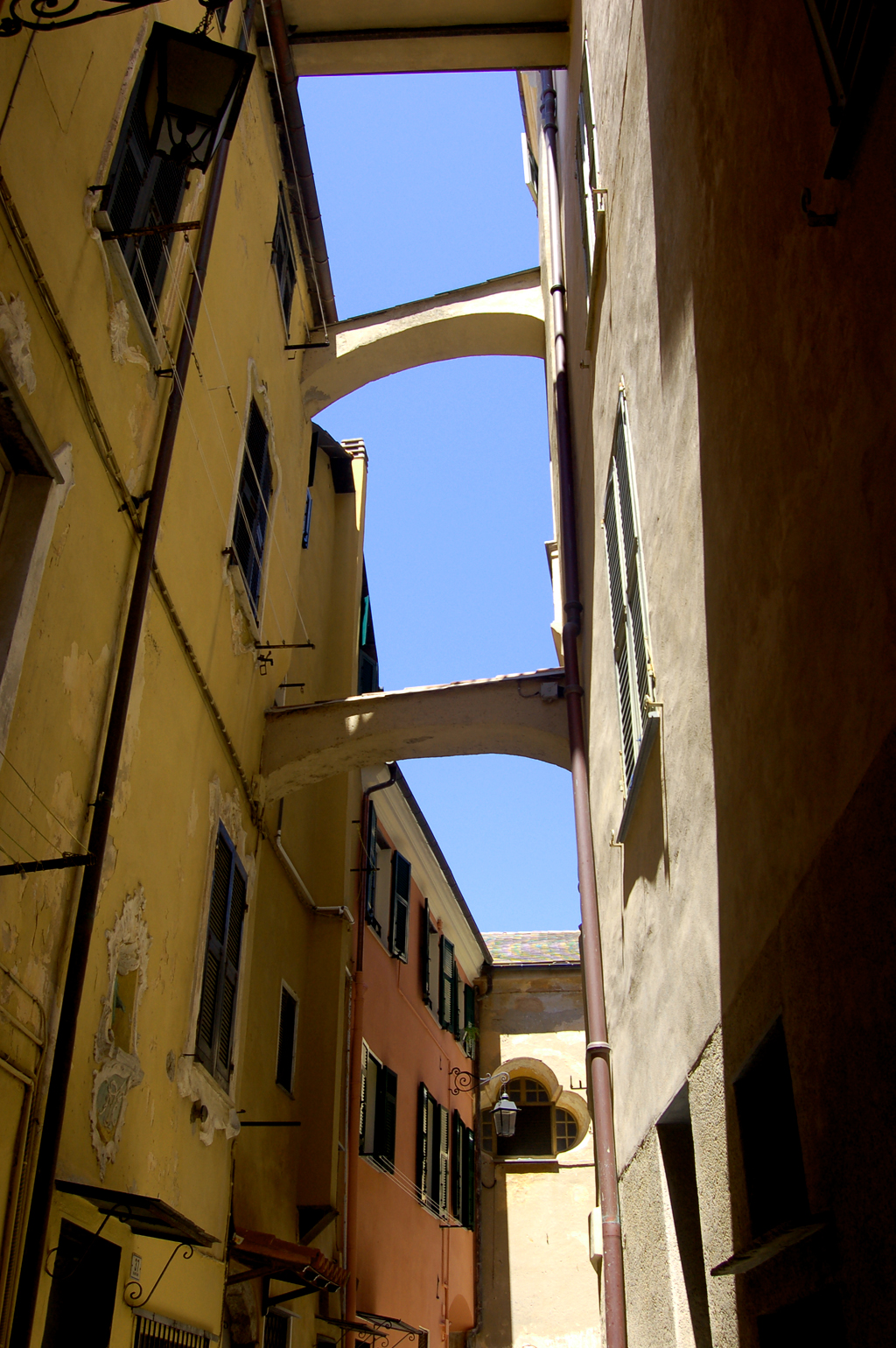
I've been absent for a while: work and dissertation have been occupying much of my time. I've also just moved into my new flat in Islington, the lovely land of red telephone boxes, falling leaves and Narnia street lamps. There really is no place like home!

Back soon, but in the meantime, I have an interview with author Sadie Jones on the Bookmunch website here, and a brand new review of Manchester Art Gallery's Angels of Anarchy exhibition on the Manchester Art Gallery site here.

[Image by Jenuine via My Love for You]

bloomberg new contemporaries 2009, cornerhouse


I have realised recently that I'm often just as struck by the mood or feel of an exhibition as I am by the individual works themeselves. This was particularly true of my recent whistle-stop tour of Bloomberg New Contemporaries 2009 at Cornerhouse, Manchester.

Now in its 60th year, New Contemporaries is made up of work selected from open submissions of work by the UK’s art school undergraduates and postgraduates. As such, there's no doubt that it's a difficult show to engage with: often controversial and often contested. This year's offering, selected by Ellen Gallagher, Saskia Olde Wolbers, John Stezaker and Wolfgang Tillmans, is no exception, even amongst the Manchester blogging community. For example, whilst Manchester Photography hails it as “THE Manchester show of the year so far” and for the Art of Fiction it is a “diverse, considered show”, runpaintrun characterises it as “the equivalent of a biggest vegetable competition at a country show. There is only so much you can be impressed by a marrow, how ever bloody big, shiny and perfectly formed it is.”

Now, I have to say I can appreciate where runpaintrun is coming from on this one. There’s no doubt that the quality of artworks in this show varies wildly – sometimes they’re experimental, sometimes controversial, sometimes intriguing, and sometimes just a little bit underwhelming. But for me, a visit to New Contemporaries is somewhat different from a visit to any other exhibition. It’s about a mood, an energy, an overall narrative. At the end of the day, New Contemporaries is a graduate show - albeit one of a very sophisticated kind - and as such, I enjoy it for the multiple directions it points me, the possibilities it offers for the future. It’s often a bit rough and raw around the edges and usually there’s a few works that I really can’t stand, but there's always something that stands out: this time, for me, it was Frances Blythe's melancholy and slightly spooky photographs of suburbia. What is more, amongst this thoughtfully-curated jumble, something rises to the surface - vitality, energy, and however misplaced it may be, an unabashed and strangely infectious optimism about the future of contemporary art.

[Image: Susanne Ludwig, Passing Church. Feasibility Fantasies via Cornerhouse]

mostly truthful


I had a lovely time reading at the launch of Mostly Truthful at Lancaster Liftest on Saturday. I must admit I expected it to be a little bit nerve-wracking as opposed to enjoyable, but in the end it proved to be an altogether very pleasant experience. It was great to be back in Lancaster, in the pleasingly familiar surroundings of the (albeit newly refurbished) Storey Institute and the audience were fantastic, but most of all, I really enjoyed the opportunity to hear my fellow writers, Jane Routh, Adrian Slatcher and Kate Feld, reading from their work.

Editor Sarah Hymas describes Mostly Truthful as "Flax's first adventure into creative non-fiction ... a vibrant collection of voices that represent a slice of now, of us being on the brink, as always, of change."

You can download the anthology, which also has an introduction by Jenn Ashworth, for free from the Litfest website here.

Creative Tourist's Top 25 Art and Culture Blogs

I’m pleased to report that I survived reading at the Manchester Blog Awards on Wednesday more or less intact. In fact, I had a great evening: I managed not to fall on my face getting either on or off the stage, and cleverly avoided being in any of the photographs of the event. Hooray!

Once the reading was over, I enjoyed catching up with Manchester pals, listening to Jenn’s tantalising reading from her new novel Cold Light, and generally making the most of the evening’s celebrations, though unfortunately I had to disappear just after the winners were announced to catch the train back to Lancaster. I’m afraid I didn’t win a prize this year – the Best Arts and Culture Blog Award went to Ella Wrendorfs of the excellent runpaintrun.

The other winners were the mysterious Lost in Manchester, for Best City and Neighbourhood Blog; Words and Fixtures, for Best New Blog and of course, the wonderful My Shitty Twenties, which was the deserving winner of not one but two awards – Best Writing on a Blog and Best Personal Blog. The full list of winners, including the judges' comments and the runners up, can be found here.

Creative Tourist, who sponsored the Best Arts and Culture Blog category this year, also announced at the awards event that they would be launching their list of Top 25 UK Arts and Culture Blogs later in the week - and yesterday I had a lovely surprise in the shape of this.

To select their list, Creative Tourist used a number of different measures to assess the popularity of a blog, including Technorati inlinks, Bloglines citations, Google readers numbers and Alexa data. The final 25 includes some fantastic blogs like We Make Money Not Art, Amelia’s Magazine, the Frieze blog, Jonathan Jones at the Guardian, Art in Liverpool, The Culture Vulture, and the FACT blog. It also includes (at number 16)… Follow the Yellow Brick Road!

I even have a jaunty yellow badge to prove it - check out that sidebar action.

In the Library


I'm spending a lot of time in libraries recently: from the amazing British Library where I'm spending most of my weekends, working on The Dreaded Dissertation, to the wonderful Barbican library, which keeps me in books to while away my daily commute.

Browsing the library shelves recently, I came upon an old favourite - an essay by the theorist Walter Benjamin entitled "Unpacking My Library". This essay is Benjamin’s hymn to his book collection, which for him becomes a “dwelling… with books as the building stones”: a home within a home into which he can disappear.

I too am a book collector. I haven't got many books here in London, but it's nice to know that back in Lancaster, they are all there waiting for me: my foundation stones, the books that built me up brick by brick. There are the vintage hardbacks with their faded paper jackets, their nostalgic endpapers, the titles arching across their spines in romantically twirled letters – Dimsie Moves Up, Dancer's Luck, Cherry Tree Perch – or dashing capitals – Underwater Adventure, Smuggler’s Cove, The Secret of Grey Walls. There are the 1970s library cast-offs with their laminated pastel covers, still shedding loose pages, tattooed with the marks of someone else’s felt-tip pen. There is that familiar rainbow of well-worn Armada paperbacks, unravelling my own past along their ragged spines: dog-eared Famous Fives and Chalet Schools interleaved with Nancy Drew adventures, priced in shillings and pence. A whole flock of Puffins: Ransome’s Swallows and Amazons jostling alongside Nesbit’s Treasure Seekers; Anne of Green Gables beside Stig of The Dump. They have a musty, archaic smell that for me will always evoke a long-lost world of bicycles and picnics and seaside adventures and plucky heroes and heroines, into which I too can disappear.

Assembled they are a cheerful, dog-eared muddle far removed from the elegant, clean-lined Parisian edifice I somehow associate with Benjamin’s book collection. This construction is infinitely more chaotic: a tiny crooked Nara-esque wendy house built out of disintegrating paperbacks, jumbled with childhood souvenirs, glinting with tarnished treasures that I can only peep at through miniature postage-stamp windows, stooping to catch distant, mysterious underwater sounds. This is my dwelling: a little house (with or without prairie), a secret garden, an enchanted wood.

Perhaps all this sounds a little too nostalgic, excessively dewy-eyed. Some years ago, I remember reading something Julie Burchill wrote in her column for The Guardian, where she derided people like me, the people who grew up secretly aspiring to “a childhood spent talking to the animals on Sunnybrook Farm perhaps, before going to board (sharing a room with Pollyanna) at Mallory Towers and then leaving with straight As to work in Narnia as Aslan’s personal assistant.” The piece was not in fact about children’s books at all, but something else entirely, yet this sentence stood out to me as if it had been highlighted, underlined in bright red pen. Burchill was doing her utmost to make the people she was describing sound ridiculous, but the more I thought about it, the more I realised this didn’t sound ridiculous at all to me. I couldn’t imagine joining Burchill in co-conspiratorial scorn at these deluded dreamers: in fact, if anything, I couldn’t help wondering how any self-respecting child raised on a diet of Blyton and C.S. Lewis could be reasonably expected to hope for anything else?

Today, “escapism” is so often dismissed with derision by writers and cultural critics: the recent tentative suggestion of children’s book author Anne Fine that maybe books don’t always need to be about realism, but instead could be the preserve of hope resulted in a barrage of criticism and condemnation. Yet from the vantage point of my paperback house, it seems to clear to me that sometimes we need to creep under the ivy, through a secret door in a garden wall, or embark on a riverside picnic with Ratty and Mole. We need to retain these happy endings, the loyal dogs and picnic baskets, the mysterious land at the back of the wardrobe. In a world where, as Thomas Wolfe once put it, “you can’t go home again,” maybe we all need a place to escape to, a “dwelling… with books as the building stones” into which we can retreat.

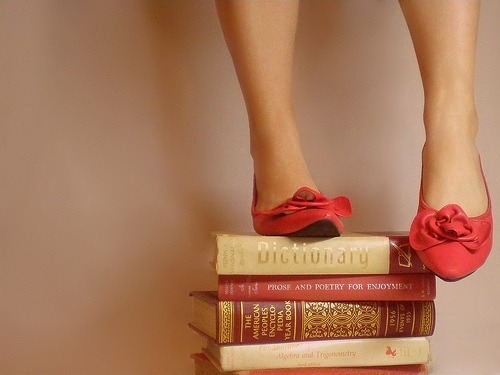
As for me, like Benjamin himself, I’m happiest “among… piles of volumes.” Right now, I have to admit that I really don't mind spending my Saturday morning in the British Library. In fact, I'm happy to be there, because wherever I go, I know that between bookshelves I’ll always find a home from home.

[Image by Arcane via Tumblr]