Showing posts with label liverpool. Show all posts

Exhibitions of the Year 2010

Somehow, I couldn't quite seem to restrict myself to a mere 'top five' exhibitions of the year this time round, so here's my (somewhat unconventional) 'top six' favourite exhibitions of 2010:

6. Exhibition #3 at the Museum of Everything.

Whilst the latest offering may not have been quite as challenging as their first exhibition, which I saw in 2009, visting the Museum of Everything is always a delightful experience. Co-curated by Sir Peter Blake, this enjoyable exhibition was a glorious riot through English eccentricity, from Punch and Judy puppets to seaside souveniers to taxidermied kittens: a friendly breath of fresh air in comparison to the slick minimalism of so many galleries and arts venues.


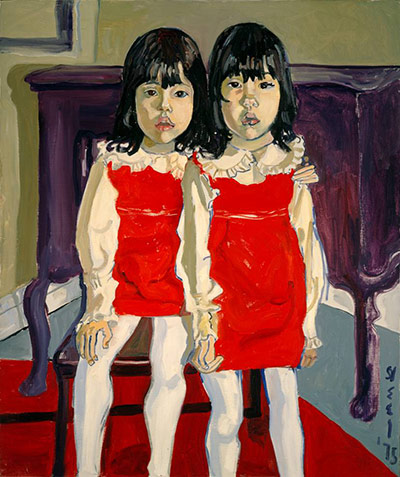
5. Alice Neel: Painted Truths at the Whitechapel

I wasn't very familiar with Alice Neel's work until I went to see this impressive and very comprehensive exhibition at the Whitechapel Art Gallery earlier this year. Focusing predominantly on Neel's portraiture, this sensitive exhibition brought together a blunt, unflinching and very powerful body of work.


4. Touched: Liverpool Biennial 2010

OK, so maybe I'm cheating slightly with this one, since Touched is really a whole programme of exhibitions rather than just one. Though no single artwork or venue especially stood out for me, the power of this year's Liverpool Biennial was its overall energy and dynamism, as well as the sheer range and diversity of work to discover in unexpected places all over the city. My highlights were Laura Belém's The Temple of a Thousand Bells (pictured), Tehching Hsieh at FACT,  Nicholas Hlobo at Bluecoat, and Ryan Trecartin's frankly bizarre Trill-Ology.


3. Chris Ofili at Tate Britain

I wasn't totally sure whether I really liked Chris Ofili's work until I saw this mesmerising retrospective exhibition at Tate Britain early in 2010. Powerful and compelling, this exuberant, joyous explosion of vibrant colour and texture was also incredibly well thought-out: a great example of what Tate do best.


From Here To Ear - Céleste Boursier-Mougenot

2. Céleste Boursier-Mougenot at the Barbican

For sheer enjoyment, this charming commission for the Barbican's Curve Gallery wins hands down. French artist Celeste Boursier-Mougenot transformed the space into a magical and uplifting soundscape, starring a flock of zebra finches. Frankly, contemporary art doesn't get much better than watching a zebra finch take a bath in a cymbal.


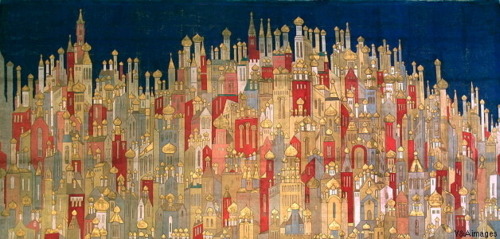
1. Diaghilev and the Golden Age of the Ballet Russes at the V&A

Narrowly squeezing in at the very end of the year, this entralling and highly atmospheric exhibition at the V&A was one of my highlights of the year. Blending visual materials with a whole range of fascinating background information about the choreography, music and design of Diaghilev's groundbreaking productions, this was a beautifully curated exhibition: rich, evocative, and full of bohemian splendour.


Read my top five exhibitions from 2009 

John Moores Painting Prize 2010


This review was first published on
Interface and is the result of an Interface and National Museums Liverpool Bursary Partnership.

Now in it’s 50th year, the John Moores Painting Prize has a reputation for offering up a selection of the most exciting new British painting. Yet far from the shock of the new, what is striking about this year’s John Moores selection are the references this diverse range of artworks makes to the traditions and conventions of painting.

A whole history of painting styles and approaches is represented here, from the photorealism of Steve Proudfoot’s ‘The Party’ to the self-conscious archaism of Veronica Smirnoff’s ‘Lubo’, painted in egg tempera onto gessoed wood panels. The acid brights of Stuart Cumberland’s ‘YLLW240, Cornelia Baltes’s good-humoured ‘There You Are’ and Ian Davenport’s technicolour ‘Puddle Painting’ nod and wink to Pop Art, whilst Jason Thompson whips up a tribute to Vorticism in ‘Refractions (Robert Hooke)’, Meanwhile, Daniel Coffield references the Surrealists and Situationists in ‘Episodical’, and G.L. Brierly brings a hint of Rembrandt to his small, precise, dark explosion of what could be a bundle of flora, fur, or something altogether more sinister.

The best of these works are far from straightforward tributes to a particular painter or painting style. In fact, many of this year’s John Moore’s artists seem to be actively seeking to disturb and interrogate the conventions of painting: Theo Cuff’s uncanny and aptly-named ‘Untitled’ is a prime example, suggesting a conventional head and shoulders portrait, but with the face at the centre of the canvas apparently obliterated by a sweeping blur of white paint. Similarly, Joseph Long’s ‘Hortus Botanicus’ is at first glance a highly conventional flower painting, until at closer inspection it becomes clear we are seeing it through a lens of plastic bubble wrap. Amongst the prize-winning artworks, Philip Diggle’s richly-textured abstract ‘For Your Pleasure’ might be a portrait, but its crusty layers of impasto in garish pinks and yellows ultimately render it unrecognisable, leaving us in the dark.

Of the prize-winning works, Nick Fox’s ‘Metatopia’ stands out – a dark, circular portal, revealing a troubled wasteland peopled by elusive, mythic figures. Referencing Rossetti and Burne-Jones, Fox here makes explicit the sexual subtexts that haunt pre-Raphaelite painting. Close by, this year’s first prize winner, Keith Coventry’s ‘Spectrum Jesus’ is a riff on the tradition of religious iconography; but this is an unexpected depiction of Jesus – anxious and alienated, depicted entirely in dark blue tones, kept behind a pane of reflective glass that both keeps us at a distance, and calls to mind holographic religious icons.

But it is Adam Fearon’s tongue-in-cheek ‘Untitled’ that finally hammers the point home: here the canvas itself performs a striptease for the viewer, exposing the wooden stretcher beneath. Ultimately, it seems that far from making painting new, the 2010 John Moores selection seeks to deconstruct and disassemble the conventions of painting– and raises some questions about what ‘new’ British painting might look like along the way.

[Image: Detail of 'Spectrum Jesus' by Keith Coventry, the winner of the John Moores Painting Prize 2010, via Liverpool Museums]

One Day at the Liverpool Biennial

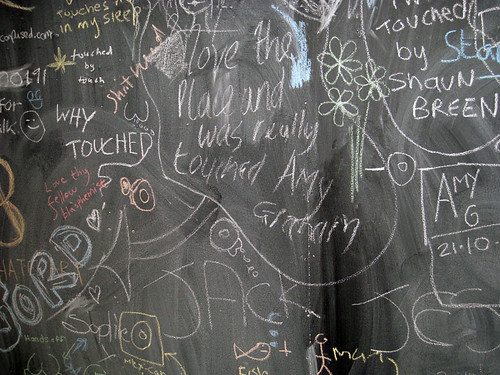
Liverpool Biennial Visitors Centre 2010 Blackboard

In the same week that the art world was shaken by the news of a hefty 29.6% funding cut in the Comprehensive Spending Review, I headed to Liverpool to check out what is undoubtedly one of the crowing jewels of the publicly-funded arts scene in the UK - the Liverpool Biennial.

The theme of this year's Biennial is Touched, and according to Festival Director Lewis Biggs, it aims to present art with 'emotional impact... that can not only gain our attention but that can move us, motivate us, allow us to find a way to change ourselves.'

My plan was to take in as many as possible of the dozens of artworks that transform the city into a vast gallery during the Biennial - both from the official Touched programme, from the Biennial Independents, and as part of all the other art projects that run alongside. How long did I have to achieve this ambitious goal? One single day - or in actual fact, about six hours. Here's how I got on:

12.30pm: Arrive at Liverpool Lime Street station about an hour later than planned, owing to some unexpected train issues requiring a detour to Wigan, though sadly no pies.

12.45pm: First stop is the Walker Art Gallery, for the John Moores Painting Prize 2010. Now in its 50th year, John Moores has a reputation for offering up a selection of the most exciting new British painting. This year's exhibition also includes works by Chinese artists entered for a new offshoot of the prize - the Shanghai John Moores Painting Prize.

There's a lot to see here, and though the works on display are a mixed bag, they raise some interesting questions about the nature of contemporary British painting. You can read my full review of the exhibition on the a-n interface website here.

1.45pm: Time to set off down Renshaw Street. Taking over the empty spaces of the city is a hallmark of the Biennial, and so its no surprise to find the windows of Rapid (an old DIY store) transformed with anti-consumerist slogans by the Freee art collective. Further on, two giggling semi-naked students pose awkwardly as real-life mannequins in the window, their skin daubed with corporate slogans, for Daniel Knorr's The Naked Corner.


Lee Mingwei's Mending Project, Liverpool Biennial 2010

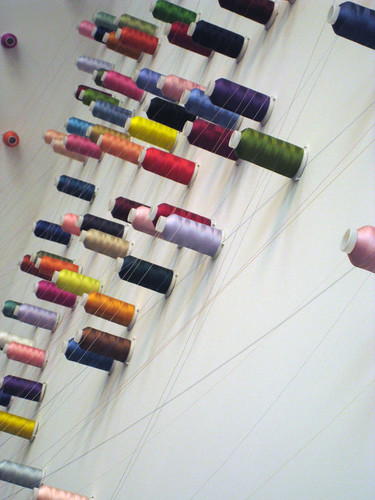
Both these works are part of Re:Thinking Trade, a strand of the Touched exhibition which also includes Lee Mingwei's The Mending Project, (above), in which visitors are asked to bring items of clothing that need mending, and keep the artist company whilst he fixes them. Rather than making the repair itself invisible, instead the process of mending is celebrated and marked with multi-coloured embroidery stitches, using the brightly-coloured threads that create a web around the space, connecting children's teddy bears with items of well-loved clothing.


Meschac Gaba, The Souvenier Palace, Liverpool Biennial 2010


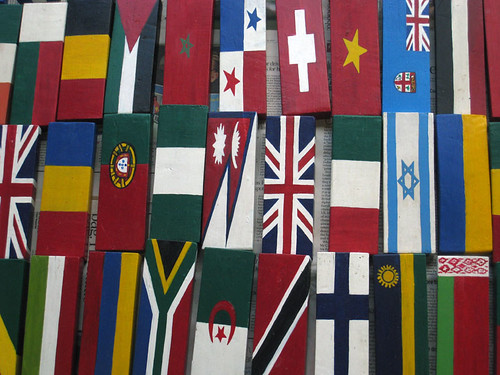
Close by, Meschac Gaba has created The Souvenir Palace (above) - a souvenir shop with a twist. Here, souvenirs are displayed alongside the accumulated detritus of everyday life, all painted in the colours of different national flags. The shop is intended to function as a trading post, so visitors to the exhibition can bring along their own personal items to be painted and swapped for those on display, in a fun riff on the commodification of national identity, and the mass production of stock souvenirs.


Liverpool Biennial Visitors Centre 2010

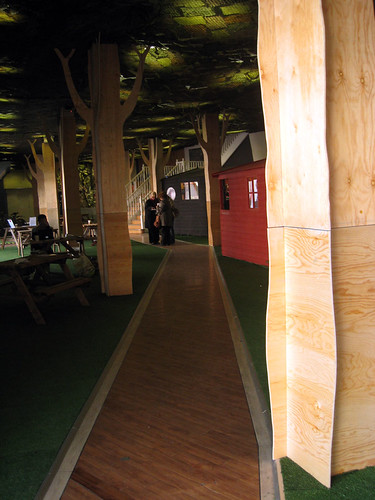
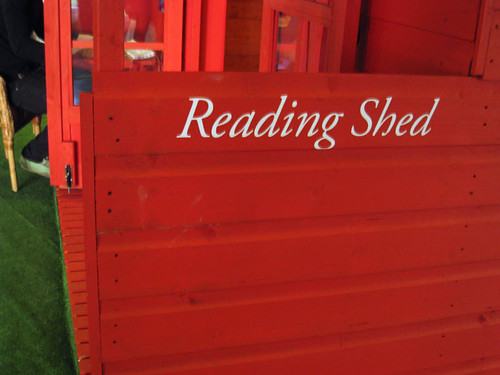
2.15pm: Also at Rapid is the Biennial Visitor's Centre (above), which transforms the disused space into a bustling faux woodland grove, dotted with sheds painted in pillar-box red (below). Blackboards provide a space for visitor feedback, as well as information about the day's events and happenings, and visitors can also explore artworks such as The Marx Lounge by Alfredo Jaar, which includes three copies of every work ever written by, or about Marx, complete with comfy sofas should you wish to peruse them.


Liverpool Biennial Visitors Centre 2010 Reading Shed

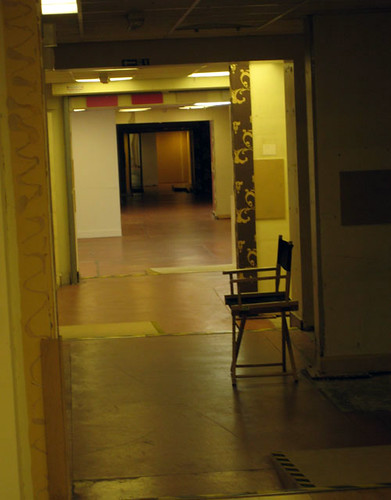
Downstairs in the basement, a labyrinth of empty, atmospheric corridors lead us to encounter Trill-Ology, a disconcerting video installation by Texan artist Ryan Trecartin, recommended to me on Twitter by @
sheshark. Here, the artist and an accompanying gaggle of shrieking, gender-bending miscreants, smeared in make-up like extras from a horror movie, perform in an extraordinarily inventive trilogy of garish video pieces - a relentless, hectic mashup of plane crashes, LA-style pool parties, soliloquies, hissy-fits and stripteases that play out like a reality TV show on acid, creating an uncanny contrast with the silent spaces of the Rapid basement.

52 Renshaw Street, Liverpool Biennial 2010


3.30pm:
After a quick pitstop for lunch (an essential item on the agenda), it's time to head onwards to the Anglican cathedral, where the Oratory is playing host to The Temple of a Thousand Bells, a installation by Brazilian artist Laura Belém, recommended to me as a highlight of the 2010 Biennial by @alistairbeech.

The chilly white space of the Oratory is the perfect venue for this ethereal installation in which glass bells are suspended invisibly from the ceiling, alongside a haunting soundtrack of music and the legend of an island temple that sinks beneath the sea.

Laura Belem, Temple of a Thousand Bells, Liverpool Biennial 2010

4.00pm: Next stop is FACT, but en route we spot a wolf (the distinctive logo for this year's Biennial, created by Carlos Amorales) and make a detour into 106 Wood Street, an empty garage that has been transformed by Raymond Pettibon into a 'mixed-media environment' incorporating the animation Sunday Night and Saturday Morning (2005), as well as wall-drawings alongside pre-existing graffiti.

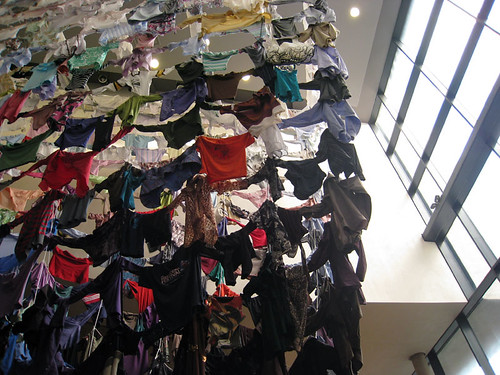
4.20pm: On to FACT, where artwork by Finnish artist Karinaa Kaikkonen has taken over the foyer space. For Hanging On to Each Other (below), Kaikkonen collected second-hand clothing from people all over Liverpool to create a colourful washing-line style installation.

Hanging On to Each Other, Kaarina Kaikkonen at FACT, Liverpool Biennial 2010

In the gallery spaces themselves, Yves Netzhammer's Dialogical Abrasion is an uncanny, alienating experience: an installation with jarring sound and lighting effects, creating a fractured and uncomfortable environment.

Meanwhile, Tehching Hsieh’s One Year Performance 1980 – 1981 (Time Clock Piece) is an incredibly intriguing recreation of the artists original performance piece, in which he took a photograph of himself every hour, on the hour, every day for a year. Although the work on display here is merely documentation of the performance itself, there is something fascinating about contemplating the thousands of images and time clock punch cards Hsieh created over the course of the year, which completely cover the walls of the gallery.

5.00pm: At the Bluecoat, where we pause in the café for much needed tea and contemplate the (empty) Bed-In, a recreation of John and Yoko’s famous 1969 peace protest, which is hosting a new action by performers, artists and others each day.

Next up are the galleries themselves, where we encounter Daniel Bozhkov's recreation of the Liverpool FC dressing rooms for his installation Music Not Good For Pigeons and Ranjani Shettar's understated installation for the Vide.

My favourite work here, however, has to be Nicholas Hlobo's Ndize, a playful installation that leads visitors through a maze of brightly coloured, densely hanging ribbons that hang from the floor to the ceiling. Part sinister funfair, part innocent game of hide-and-seek, this is a genuinely disorientating and entertaining experience - the perfect end to our Biennial odyssey.


6.00pm: It's time to head home. There's so much more I wish I'd had chance to see... Do-So Huh's
Korean House, more Touched offerings at Tate Liverpool and in the public spaces of the city, Bloomberg New Contemporaries at A Foundation, not to mention some of the many events and 'happenings' that have been taking place throughout the Biennial period... but there's only so much art you can realistically fit into one day, or in fact a mere six hours.

Final thoughts on this year's Biennial? There's an incredible range of work here, but for me, what makes it extra-special is the way we encounter it in unexpected places and spaces across the city. Perhaps that's why during the Biennial, Liverpool feels more like a playground than a conventional art gallery, full of idiosyncratic and exciting artworks to discover and engage with. Much of it is baffling, but some of it is brilliant; for me at least, the final word has to go to Adrian Searle, in his review of the Biennial for the Guardian: ‘There are things I do not understand – but sometimes this doesn’t matter.’

So did you visit this year's Biennial? What did you think of it - and what were your highlights?

urban/ecology exhibition


The Urban/Ecology exhibition opens in Liverpool today, featuring work from Art Yarn, James Brady, Rob Bailey, Ben Gwilliam Sarah Hardacre, Rebecca McKnight and Tenneson & Dale amongst many more!

Check it out if you're heading to Liverpool this weekend - find out more here.

liverpool biennial 08: MADE UP


I feel like I’m still recovering from my 36-hour dash around Liverpool for the opening of the 2008 Liverpool Biennial. My feet are certainly still recovering - I think dancing in very impractical heels at the after-party at A Foundation was the straw that finally broke the camel’s back (or perhaps hoof, in this case?).

Anyway, today I am resting. Currently, I am horizontal, or at least as horizontal as it is possible to be whilst typing.

This year’s Biennial explores the theme MADE UP: the power and richness of the artistic imagination, and the ability of art to transport us to alternative realities. There’s lots of fantastic work to see in both the city’s galleries and public realm spaces, engaging and experimenting with notions of fiction, fantasy, make-believe, myth, spectacle, and the tensions between the real and the unreal. I’ve still got lots to see, but here are a few highlights from my fast-paced, foot-destroying tour on Friday:

MADE UP at The Bluecoat is an enjoyable exhibition exploring the relationship between fantasy and everyday life. Sarah Sze’s installation in The Vide is constructed from a series of banal everyday materials which come together to create a fascinating fragmentary landscape resembling both an intricate sculpture and the residue of a whirlwind or explosion. In the upper gallery, Tracey Moffat’s First Jobs depicts the artist undertaking a series of odd jobs from working as a receptionist through to manning the production line at a pineapple cannery. Acid-bright colours transform these mundane images of workplaces associated with boredom and low-pay into a candy-hued, nostalgic vision of the past. Meanwhile, the wonderful Barefoot Lone Pilgrim (aka artist David Blandy) documents his spiritual journey in search of ‘mythical’ American soul singer Mingering Mike through drawings, artefacts and a brilliant Monkey-inspired video, conflating real life and imaginary adventures and identities. Garbage Day by The Royal Art Lodge - a collective of six artists including Marcel Dzama who are known for producing eccentric collaborative works referencing everything from comics through to science fiction - is a natural companion to Blandy’s work, sharing his playful sense of humour. This installation presents a series of over 200 small panels that lead the viewer around the gallery, offering us a series of quirky stories and surreal characters, characterised by bright colours and a naive, illustrative style.

The MADE UP theme continues at Tate Liverpool where curator Laurence Sillars has taken ‘between the real’ as the starting point for a diverse selection of commissions encompassing painting, sculpture, drawing, video and installation. Artists including Adrian Ghennie and Teresa Hubbard and Alexander Birchler penetrate the layers of histories, narratives and memories, whilst works like Omer Fast’s darkly comic video Take A Deep Breath playfully subvert the boundaries between fact and fiction. My personal highlight of the Tate show was The Drawing Room - a gallery space bringing together a wide selection of work by four artists who use drawing as their primary practice. Amongst them, Charles Avery’s fascinating images document the landscapes and inhabitants of an imaginary island partially inspired by childhood memories, whilst the wonderful Rachel Goodyear’s uncanny and beautiful drawings are resonant with myth and fairy-tale.

FACT and Open Eye Gallery both also have intriguing exhibitions exploring the theme MADE UP: FACT's Creature Creation Station in particular is well worth a visit, offering visitors the chance to re-imagine themselves as a strange, otherworldly creature, whilst upstairs in the bar, Lisa Reihana’s Colour of Sin: Headcase version 2005 invites us to listen to a series of conflicting stories piped through retro 1970s hairdryers.

Meanwhile, in the city’s public spaces, the former ABC cinema on Lime Street is the perfect location for Annette Messenger’s ghostly theatrical installation La Dernière Séance, whilst the back room of The Vines pub, which mixes fruit machines with opulent chandeliers, is a fabulous setting for Gabriel Lester’s film The Last Smoking Flight: images of floating clouds and wafting tobacco smoke are captured and reflected in a succession of mirrors around the room. A little further down the street, Manfredi Beninati’s new site-specific commission offers us a tantalising and uncanny glimpse of a secret life between the facade of an abandoned building covered with posters: a gap in the hoarding allows visitors to peep into an apparently empty apartment, where the remains of breakfast are still on the table and a newspaper lies on the floor. It’s still early days for Yoko Ono’s Liverpool Skyladder, an installation situated in the beautiful ruined church of St. Luke’s, which invites visitors to donate stepladders to create a ‘forest of steps’ reaching up to the sky, but it will be interesting to see how it develops as more ladders arrive. And of course, Richard Wilson’s impressive and wonderfully hypnotic Turning the Place Over is an absolute must-see.

This year's Biennial has received some mixed reviews: Charlotte Higgins, writing for The Guardian blogs, criticises it as "a patchy event" with "an awful lot of dull, indifferent or bad stuff going on that left me feeling underwhelmed." Personally, I can't agree: far from being indifferent or dull, there's no doubt in my mind that the Biennial has been a real highlight of Capital of Culture, and would absolutely recommend everyone to visit. Just make sure you remember to wear comfortable shoes.

pipilotti rist @ FACT


This week, amongst other things, I went on a little trip to Liverpool for a work-related event. The event itself was very interesting, but a little too participatory for my liking (we had to do a tableau at one point. Yes, really).

However, having survived my day of participation, I took myself over to FACT to see the new Pipilotti Rist exhibition, and I think I have now found myself a new favourite media artist.

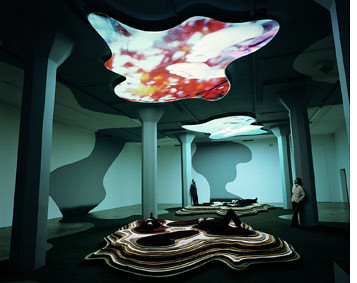
For me, the highlight of the show was the installation Gravity Be My Friend, which invites viewers to lie down on heaps of soft carpeting, arranged like islands drifting through calm seas, to watch video projections shown on the ceiling. Moving through hazy, Edenic landscapes, to the background of an uncanny lullaby of strings and bells, we glimpse vague mermaid-like figures moving through an underwater haze. The work is rife with dream-like symbolism, but for me, it’s peculiar power lay in its ability to evoke a strange nostalgia for lost childhood summers, and the most elusive early memories, enhanced by a vivid colour palette of apple-red, sky-blue and grass-green.

Your Space Capsule, in Gallery 2, continues the theme of childhood, re-creating the pleasure of miniature dolls-house landscapes. Peering inside what appears to be an ordinary crate abandoned on the gallery floor, we find ourselves looking down into a tiny, private space, perhaps a student flat, complete with books and records scattered on the floor, a plant in a pot and even a tiny pizza in a box. What makes this tiny space unique is that an enormous planet against a cosmic background of stars has literally invaded this intensely personal territory, making an interesting statement about the relationship of the particular and universal, the individual and the eternal, the miniature fragments of space we occupy and the broad horizons we can fathom. Meanwhile, Apple Tree Innocent on Diamond Hill dangles a variety of clear plastic packaging from the branch of a tree, transforming everyday domestic objects into twinkling, transluscent objéts d’art, seemingly endowed with a strange, almost magical power, as if a part of some secret ritual or unknown child's game.

Writing for The Guardian here, Adrian Searle complains that this exhibition “sometimes makes me feel as if I'm stuck inside a vegan, possibly even fructarian, new-age indoctrination video” and even compares Gravity Be My Friend to a hair conditioner ad. I can see where he’s coming from - there’s no doubt that Rist’s interest in 1960s art and culture and utopian idealism infiltrate these works, and yes, there might even be a Timotei moment or two. But there is a strong sense of humour implicit behind this throughout all of Rist’s work: an enjoyable, infectious “silliness” which Searle himself acknowledges. This is perhaps most obviously embodied in her 1997 video Energy Is Over All, which is perhaps the best-known work in the show, and clearly reveals the artist’s infectious, anarchic good humour. Here, a woman in a flirty, floaty summer dress dances blithely down a city street, pausing every now and again to smash the window of a parked car with the long-stemmed flower she carries. These unexpected acts of violence are seemingly tolerated by a friendly policewoman, who becomes almost a co-conspirator in the act itself. Of course, I noticed that the woman is wearing red shoes: it’s no surprise to read that feminist theorist and writer Peggy Phelan has suggested that she acts as a parallel Dorothy figure, skipping merrily in her ruby slippers down a modern-day urban yellow brick road.

For me, it’s precisely this sense of energy, irreverence and playfulness which makes these works so enjoyable and engaging, particularly in contrast to some media artworks where technology serves to keep us, as viewers, distanced and unable to access meaning, firmly at arms length. Instead, Rist seems to find a child-like delight in the magic, the sheer imaginative power and the possibility for aesthetic beauty offered by moving image as an artistic form; she gleefully welcomes us to join in the game, to play in her own carefully-constructed fantasy wonderland, as in the installation The Room which physically throws us back into childhood. This sense is, of course, reinforced by the knowledge that the artist’s name ‘Pipilotti’ is a fusion of her own childhood nickname, and the heroine of her favourite children’s book, Pippi Longstocking, giving a clear indication of the enormous importance of play, childlike imagination and innocence at the heart of Rist’s artistic practice. It’s perhaps for this reason that in concluding his review of the show, Searle describes Rist’s work as “a guilty sort of pleasure”, but for me, it’s far less complicated: it’s absolutely this kind of sheer joy and enjoyment which is exactly what the art I like best is all about.

[Image via flickr]