(belated) happy holidays


I've been absent for a while: a beautiful snow-white Christmas has been and gone, and now, all of a sudden, it's almost a whole new decade. December has been an insanely busy month for me: I spent most of it either being ill or working on completing my masters dissertation, which I finally submitted on 23 December. Hurrah!

Now the dissertation is at long last completed, I'm anticipating a delightful 2010 including lots of lovely and frivolous things, and not much reading of serious books or indeed learning of any kind. And I'm also looking forward to spending more time here.

Hope everyone has had a jolly holiday - and happy new year!

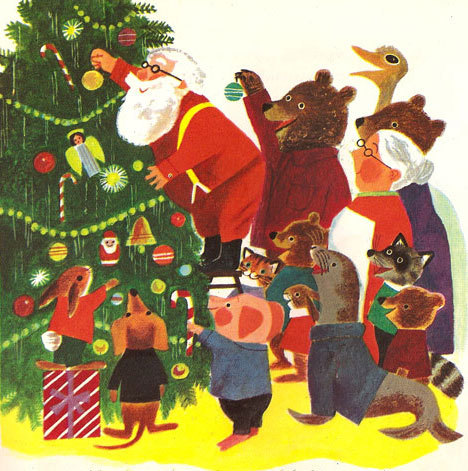
[This lovely festive illustration is by J.P. Miller and comes via Grainedit]

sophie calle: talking to strangers

I love this beautiful photograph from Talking To Strangers, a retrospective exhibition of work by the French artist Sophie Calle, which I recently went to check out at the Whitechapel Art Gallery.

The exhibition includes the premiere of the English language version of Prenez Soin de Vous (Take Care of Yourself), which was first shown as part of the 2007 Venice Biennale, and which I've been looking forward to seeing ever since I first heard about it. This installation is a response to an email Calle was sent by her lover, the unnamed ‘X’, ending their relationship, which concludes with the words ‘take care of yourself’. Calle invited women, ranging from a ballerina to an accountant, a tarot card reader to a sharp-shooter, to use their professional skills to interpret the text, as follows:

“I asked 107 women... chosen or their profession or skills, to interpret this letter. To analyse it, comment on it, dance it, sing it. Exhaust it. Understand it for me. Answer for me. It was a way of taking the time to break up. A way of taking care of myself.”

Walking through this beautifully presented installation, a combination of video, photography and text, we encounter the responses of everyone from a 9 year-old girl (‘It is sad’) to a criminologist (he says ‘I’ more than 30 times in a letter with 23 sentences’). Actors Jeanne Moreau and Miranda Richardson read the text aloud in French and English respectively; others interpret it through dance, music, puppetry and even chess; a children’s writer transforms it into a fairy tale; whilst my personal favourite, Brenda the green parrot, happily tears it to shreds in her beak. Prenez Soin de Vous is a deeply intriguing and often very entertaining work: I could happily have stood for hours exploring this fascinating multiplicity of responses. However there’s also something slightly unnerving about this cacophony of female voices, perhaps partly because it is so powerfully gendered. Whilst it can be read as a straightforward celebratory feminist artwork, the installation also hints to both aggression and obsession directed towards the invisible (and perhaps indeed fictional) excluded male subject, the unknown ‘X’. Yet there is the distinct sense here that the artist herself is aware of these tensions, subtly and playfully exploiting the sense of ambiguity in her work: we are left feeling that it would probably be possible to construct just as many different ‘readings’ of Calle’s artwork as there are responses to ‘X’s original text itself.

The exhibition continues upstairs with earlier works spanning the past 20 years of Calle’s career, many of which demonstrate a similar kind of subtle ambiguity. In The Sleepers (1979) the artist made one of her earliest forays into participatory and collaborative work, inviting 29 strangers to sleep in her bed; this interest is continued and developed through works like The Address Book (1983), a voyeuristic investigation of the owner of a found address book through the contacts listed within it, and Berck (2008) in which Calle invites a medium to determine her actions on the basis of clairvoyant predictions. Amongst these earlier pieces, I particularly enjoyed Gotham Handbook (1994), in which Calle follows to the letter a series of instructions sent to her by the writer Paul Auster - including talking to and smiling at strangers; handing out cheese sandwiches and cigarettes to homeless people; and adopting a corner of the city, in this case a phone box which she ornaments with flowers, snacks, magazines and ‘have a nice day’ notices - and minutely records the social interactions that result.

For me, Calle’s work seems distinctively French – elegant, disarmingly confident in its treatment of complex ideas, and exhibiting a sprinkle of charming, almost Amélie-like whimsy. But what I find particularly interesting and engaging about these works are their explicitly textual nature: this is art about language and interpretation, art that tells stories, art that requires reading – it’s no surprise to learn that Calle has collaborated with a writer like Auster, even appearing as a fictional character in one of his novels.

Altogether, Talking to Strangers was a fascinating experience: at once deeply personal, whilst simultaneously exhibiting a certain arch detachment. Indeed, intelligent and nuanced though they may be, what I finally liked most about these works is their playful sense of humour; even Prenez Soin de Vous itself comes with a knowing wink and a smile.


[Images via Whitechapel Gallery]

the haunted bookshop


One dark and stormy night this week, I ventured through the rainy streets of Shoreditch to the opening of a pop-up shop with a difference: the mysterious Black Dog Books.

Black Dog Books, which describes itself as “London’s most unusual bookshop” is the brainchild of East End gallery Black Rat Projects: a pop-up antiquarian bookshop, built inside their railway arch gallery. This beautifully-realised installation perfectly recreates the atmosphere of a tiny, creaky old-fashioned bookshop, complete with vintage fittings, an antique till and even a welcome mat. You can browse (and buy) a selection of books ranging from Where the Wild Things Are and The Gruffalo through pleasingly shabby paperback poetry books, through to a range of new artist books, exhibition catalogues, monographs and quirky artist-made fanzines.

But watch out for surprises: Black Dog Books is rumoured to be haunted. According to Black Rat Projects: “The idea of creating the bookshop came when the Black Rat owners slept in the gallery one evening and were woken by the toilet flushing and books falling from the office bookshelves. Thinking they were being burgled, they turned the lights on only to find the gallery empty. Asking around, a local landlord mentioned that the gallery had been used to store the stock of legendary Victorian book dealer F.J. Williams, who disappeared in 1903 and is rumoured to haunt various pubs and houses around the East End."

Black Rat Projects continue: "Reports have already been received of eerie incidents and strange happenings, with books magically flying off shelves, and lights switching themselves on and off. Halloween may have been and gone but the real ghosts and ghouls work all year round.”

Designed by Will Randall and Giles Walker, and supported by publishers including Tate and Thames and Hudson, Black Dog Books certainly makes the most of this supernatural history. I'm afraid I can't promise a genuine encounter with the ghosts of East End London, but there are some enjoyable uncanny touches here, not least the presence of a strange figure guarding the bookshop entrance...

Black Dog Books can be found at the Black Rat Projects gallery, through the Cargo garden, Arch 461, Kingsland Viaduct, 83 Rivington St, London.

under a red umbrella

I have to admit that there are some times when London feels like awfully hard work. Getting on and off endless buses and tubes and trains. Fighting your way through rush hour crowds. Negotiating the pedestrian crossings at Oxford Circus. Battling your way round Sainsbury’s in Angel on a Saturday afternoon. Encountering numerous random people who seem to be unaccountably angry about absolutely everything, for example, the man at Highbury and Islington station who has been known to stand on the platform and shout “You’re a LIAR” at the TFL guy with the megaphone when he’s just announced that a Good Service Is Currently Operating on the Victoria Line.

But then there are those other moments when London feels like everything you want it to be. Just recently, I was walking down Regent Street on one of those dark, wet evenings when everyone is hurrying to get home. All around me, everyone was elbowing their way onto buses and down into Oxford Circus underground station, but safe in the shelter of my red umbrella, there was something strangely pleasing about dawdling along the street, taking in all the shop windows, and admiring the kitsch Christmas lights down Carnaby Street. Shimmering with the rain, the street seemed transformed into somewhere unexpectedly magical. Perhaps for no other reason that everyone else was hurrying away into the dark at such a pace, for a moment or two, I felt as if the city belonged to me alone.

The crowning touch was stepping into Liberty’s to check out Luella’s Christmas grotto, and of course, to admire the magical Christmas windows – a riot of charmingly festive nostalgia:

For more pictures of the lovely Luella windows, check out Wee Birdy and Wish Wish Wish.

P.S. Whilst we're on the subject of Christmas windows, I must briefly mention the fabulous windows at Harrods, which this year have a special Wizard of Oz theme to celebrate the 70th anniversary of the film! You can even buy your very own pair of ruby slippers, though sadly by the time I had made it to Knightsbridge they had all sold out...


[Liberty's window image via Dazed Digital]

the museum of everything

The Museum of Everything: Art Comments

Take just a few steps away from the chi-chi cafes and boutiques of Primrose Hill; follow the hand-lettered red signs tied to the trees; turn left by Chalk Farm Library and you find yourself standing before a crooked doorway fit for a fairy-tale or funfair. The sign above the door, reads simply, in mismatched letters: EVERYTHING.

This is The Museum of Everything – a boldly-titled pop up gallery housed in a former dairy and recording studio, bringing together works by 90 artists from Europe, America and Asia. Yet what separates The Museum of Everything from London’s wealth of temporary art spaces and pop-up exhibitions is its subject matter: this gallery is devoted entirely to showcasing the very best in outsider art. The works on display here are created outside the mainstream art world, with its markets and its institutions: here, self-taught artists and makers represent a variety of extreme mental states, presenting a wealth of unique fantasy worlds and unconventional perspectives. As The Museum of Everything puts it: “For these artists there are no studies, no press junkets, no art fairs, no magazine spreads. Instead there are treasure troves of untrained work, discovered under rocks in basements and attics, its creators often unaware their art will ever see the light of day."
Henry Darger

Far from the conventional white cube gallery, the works in this exhibition are presented in a deliberately haphazard fashion, jumbled together in exuberant, and almost overwhelming chaos. You encounter these works in a series of dimly-lit rooms, twinkling with strings of fairy-lights; ducking down rough-floored corridors under swaying bead-fringed lampshades; tripping down tottering staircases and along a labyrinth of creaking passages; peeping through windows and vitrines into miniature theatres of the obscure and eccentric.


Rev BF Perkins: King Tut Treasure

Every turn offers something unexpected to discover, from Charles August Albert Dellschau’s intricate sketchbook pages to Emery Blagdon’s complex wire ‘Healing Machines’ to Morton Bartlett’s disturbing mannequins. This mixed-up assemblage of works certainly reveals the vitality and diversity of outsider art, ranging from the meticulous, systematic order of drawings by Hioyuki Dori and Heinrich Reisenbauer to the imaginative flamboyance of Russian military enthusiast Aleksander Lobanov. Each artist offer us a glimpse of their own particular imaginary space, be it the ghostly world of medium Madge Gill’s intricate black and white drawings, in which wistful female faces appear and disappear against an elaborate backdrop of Alice-in-Wonderland kaleidoscope patterns; Aloise Corbas’s portraits of fantasy princesses with flamboyant jewels and magnificent swirling hair; or Henry Darger’s ‘Vivian Girls’ – a complex, illustrated narrative about the heroic escapades of a group of beautiful young girls, which on closer inspection is disturbed by the inclusion of sinister and subversive elements in surrealist fashion. Peeping into these inner worlds, the viewer is occasionally invited to take a closer look through magnifying glasses or binoculars, in a clever play on the distance between gazer and object, artist and spectator, insider and outsider.


George Widener: Friday Disasters (Photo: Museum of Everything)

This quirky showcase of secret artworks is accompanied by a series of texts by well-known artistic and cultural figures, including Hans Ulrich Obrist, Peter Blake, Ed Ruscha, Grayson Perry, Mark Titchener, Eva Rothschild, Jeremy Deller, Jarvis Cocker and Nick Cave; yet thankfully, on the whole they resist the temptation to over-intellectualise, or obscure these works with contemporary art jargon. Instead, in general these texts appear to focus primarily on what inspires and excites about these works, setting the tone for an exhibition which skilfully side-steps value judgements. For in the end, it doesn’t really seem to matter who has made these works, or what their ‘outsider’ status might be: far from grappling with questions of what makes these works are ‘art’, instead The Museum of Everything is primarily focused on offering the viewer an idiosyncratic gallery experience. Though this quirkiness sometimes may feel a little too contrived, this higgledy-piggledy assemblage of artworks certainly conveys a vivid sense of intensity and frenetic energy often missing from a more conventional presentation of work.

Alfred Jensen

At the end of the journey you emerge, stepping through a ribbon curtain into a café that could be straight from a village fete – complete with tea, jam, and things to buy that have a pleasingly handmade aesthetic. Self-consciously kooky though it may well be, The Museum of Everything is certainly a memorable experience: a colourful treasure-trove of the surprising, thought-provoking and bizarre.

Liked this? Vote it up on the blogpaper!

new home


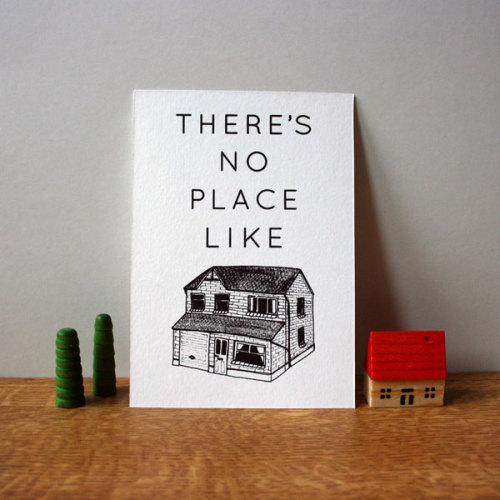
I've been absent for a while: work and dissertation have been occupying much of my time. I've also just moved into my new flat in Islington, the lovely land of red telephone boxes, falling leaves and Narnia street lamps. There really is no place like home!

Back soon, but in the meantime, I have an interview with author Sadie Jones on the Bookmunch website here, and a brand new review of Manchester Art Gallery's Angels of Anarchy exhibition on the Manchester Art Gallery site here.

[Image by Jenuine via My Love for You]

Angels of Anarchy at Manchester Art Gallery


This post was originally written for Manchester Art Gallery's Angels of Anarchy microsite.

Stepping down the dark red tunnel and entering Angels of Anarchy is like emerging into a hushed treasure trove of elaborate, otherworldly curiosities. There is so much to discover here, from Méret Oppenheim’s theatrical surrealist objects to the disturbed domestic spaces of Dorothea Tanning’s eerie gothic paintings; Frida Kahlo’s exuberant still-lifes to the elaborate, unquiet fantasy landscapes of Leonora Carrington. What is more, this selection of artworks from three generations of female surrealists is accompanied by a fascinating miscellany of ephemera – from the limited edition books and little magazines so essential to the development of the avant-garde movement, to personal letters, drawings, and even a tarot pack designed by Ithell Colquhoun.

But for me, the real treasure amongst this rich and diverse assembly is the selection of portraits. Much of the work in this section is less overtly surreal: instead, Eileen Agar’s illustrative pen and ink drawing, and Leonor Fini’s line and wash work are delicately graceful and understated; whilst Lee Miller’s warm and evocative portraits of her fellow artists are elegant, though often subtly uncanny. Yet interestingly it is also Miller who offers us one of the most troubling and indeed profoundly surreal self-portraits in this exhibition – a photograph of an amputated breast laid out on a plate, complete with knife, fork and napkin, as if ready for consumption. Meanwhile, looking at Claude Cahun’s miniature self-portraits is like peeping through a series of tiny windows at the disorientated artist-subject as she performs a whole series of different identities before the viewer. It is in this section that the complexities of female subjectivity, the tension between woman as muse and woman as creator, really begin to unravel themselves in full.

Like so many of the other twentieth century avant-garde art movements, surrealism has always seemed the enclave of iconic male artists: Salvador Dalí, René Magritte, André Breton and the rest. Yet the strikingly feminist artworks that make up this exhibition are easily as original and subversive as the better-known works of their male contemporaries, mounting a powerful, but often distinctively mischievous challenge to the conventions of art, as well as to the orthodox gender politics of their contemporaries. Especially intriguing is an array of drawings from the surrealist game Exquisite Corpse, where art becomes the product of a communal creative activity, no longer the preserve of the individual (male) artistic genius, working in isolation, but something altogether more exuberant.

In the end, it was this sense of exuberance and energy that for me was most striking – and indeed, most enjoyable – about my delve into this haunting assemblage of artworks: Angels of Anarchy is above all an encounter with the dynamism and vitality of this secret history of twentieth-century avant-garde art.

[Image: On Being An Angel (1977) by Francesca Woodman, courtesy of George and Betty Woodman and Marian Goodman Gallery, New York, via Manchester Art Gallery]